[ad_1]
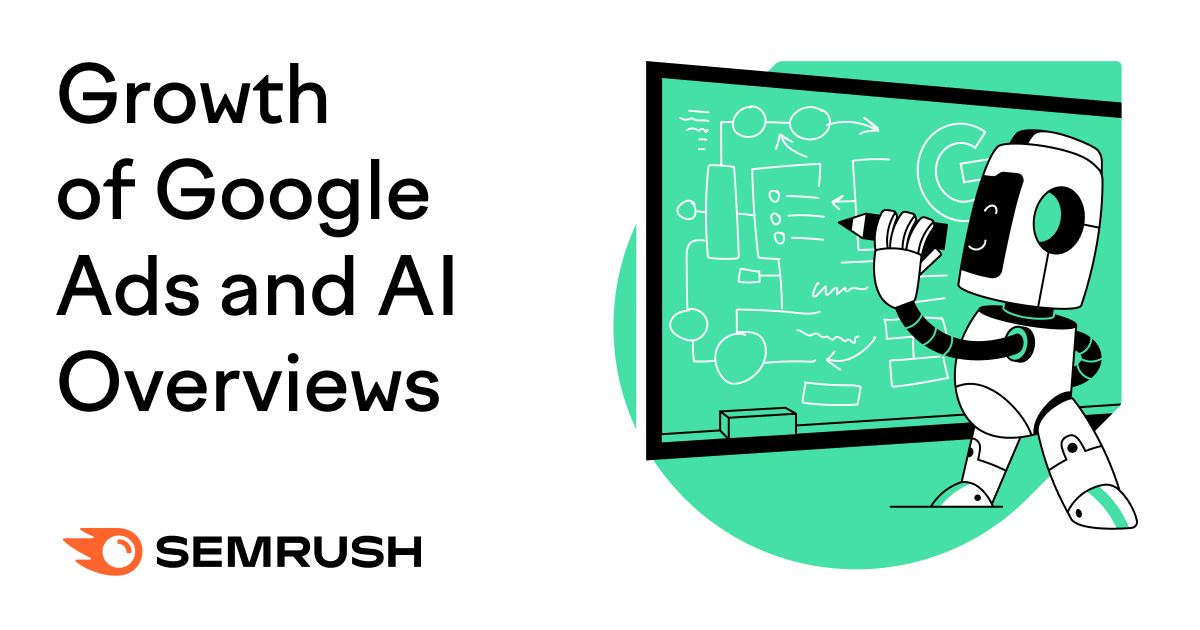
While SEOs spent much of 2025 worrying that AI Overviews (AIOs) would siphon off even more organic traffic, Google was figuring out how to balance improving the AI search experience with their need to maintain an ad revenue model.
Near the end of the year, we noticed Google increasing this combination of AIOs and ads on search engine results pages (SERPs).
How Much Ads Appearing on AI Overview SERPs Increased
By October 2025, Google Ads appeared on 25.56% of search results that included AI Overviews—up from just 5.17% in March.
That’s a 394% increase in eight months.

We discovered this when updating our AI Overview study that tracked over 10 million keywords during 2025.
The data reveals an intentional adjustment from Google to redesign how advertisers can reach customers in AI-driven search.
Where Google Ads Appear on SERPs with AI Overviews
Looking deeper at this increase of ads, we can see that ad placement wasn’t uniform across the SERP.
Some ads appeared well below AI Overviews, while some ads actually showed up at the top of the SERP, either before or just below Google’s AI summary.

From March through August, ad occurrences on SERPs with AI Overviews stayed under 10% across all positions.
Then in September, all three placement types surged simultaneously—suggesting Google made a decision here.
- By October, bottom-of-SERP ads had reached 25% of AIO results
- Middle-of-SERP ads grew in September but then settled at around 13% in October
- Top-of-SERP Google Ads grew in October, but to a lesser degree than ads at the bottom or middle of the SERP.
It’s worth noting that of the 25.58% of AIO SERPs featuring a Google Ad in October 2025, 25.01% of those SERPs included ads at the bottom.
This means that when Google integrates ads into AI-driven results, a bottom-of-page placement (with or without other ad placements) is almost a certainty.
What Types of Searches Include AI Overviews
The increase in ads makes sense when you see how AI Overviews have expanded to more types of searches.
At the start of 2025, AIOs were mostly informational. Now, they appear for terms across the whole funnel.
- January 2025: 91.3% of queries triggering AI Overviews had informational intent
- October 2025: 57.1% of queries triggering AI Overviews had informational intent. The other 42.9% were for searches with commercial, transactional, or navigational intent.

This increase in AI Overviews appearing on SERPs with navigational, commercial, and transactional search intent aligns with the trend we saw in more AI Overview SERPs containing ads.
This is because those intent types have more value for businesses and, therefore, more advertisers.
What This Information Means for Search Marketers
Early on in their release, AI Overviews were seen as mostly a barrier to informational search traffic. The top of the SEO funnel was shrinking.
But the combination of AI Overviews and ads changes the dynamic.
When both appear on a SERP, users are more likely to stay on the results page—either reading the AI summary or clicking an ad to convert.
Both outcomes benefit Google, which explains why this combination is becoming more common.
And this trend isn’t slowing down. Google is already testing ads within AI Overviews themselves, not just alongside them on the results page.
So, we should expect AI Overview SERPs with ads to become the norm—not the exception.
Marketing teams need to figure out how to best attract customers with both ads and AI Overviews in the picture, which likely involves both pay-per-click (PPC) advertising and SEO.
We’ve long known that PPC and SEO reinforce each other:
- Ads capture high-intent traffic and visibility now. They appear almost instantly and can convert users who are ready to take action immediately. And insights from ads can be leveraged for SEO wins.
- SEO provides sustained and unpaid visibility. Strong organic rankings provide visibility that can last for weeks, months, or even years among people who scroll past the AI and ads on Google.
That relationship extends to AI search as well.
When users see your brand across multiple placements (in an ad, an AI summary, and organic results), it builds more trust that can eventually drive action.
Trust Semrush One for Winning Search in 2026
With Semrush One, you can manage every part of your search visibility in one place.
Sign up for a trial today to see your brand’s opportunities in SEO and AI search.
[ad_2]
Source_link