
[ad_1]
There’s no hard limit on keyword length in search engine optimization.
But how long can keywords be has a big impact on how competitive they are, how people search for them, and how realistic it is for you to rank in search engines like Google.
That’s what this article breaks down.

Link building cheat sheet
Gain access to the 3-step strategy we use to earn over 86 high-quality backlinks each month.
How Long Can Keywords Be?
There’s no technical limit on how long a keyword can be.
Google doesn’t care whether a search query is two words or twelve. If people search for it, it’s a keyword.
In SEO, we usually group keywords into short-tail keywords and long-tail keywords. A short tail keyword is typically one to two words. They’re broad, competitive, and often vague in search intent. A long tail keyword is longer, usually five or more words, and they’re much more specific.
In practice, most SEO keywords worth targeting fall somewhere in the 5–6 word count range. That’s where you get clear intent without the keyword turning into something overly obscure.
Anything longer often becomes a full sentence or a question, which still counts as a keyword, especially with how conversational search has become.
So keyword length isn’t about hitting a number. It’s about how precisely the query describes what the searcher wants.
Are Longer Keywords Better Than Short Ones?
In most cases, yes.
Long tail keywords are usually easier to rank for than short tail keywords. They’re more specific, less competitive, and don’t attract every site in your space. Even though they tend to have lower search volume, you can often reach the top 10 search results much faster.
That trade-off is usually worth it. Ranking quickly for several long-tail keywords often brings in more consistent traffic and a better conversion rate than chasing one short, highly competitive term for months.
In fact, the very keyword this article is targeting is an AWESOME example of a long-tail keyword:
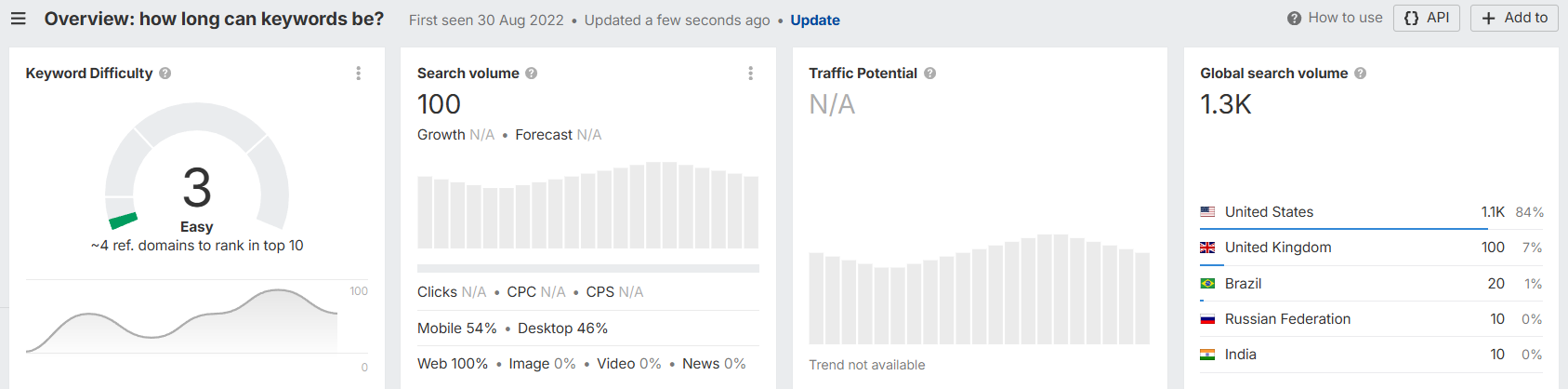
Longer keywords also match how people actually search. Especially with voice search, queries are often full sentences or direct questions, not chopped-up phrases.
Short-tail keywords still have their place, but if you’re trying to build traction, long-tail keywords are usually the faster and more reliable win.
How to Find High-Volume, Low-Competition Keywords?
The easiest way to find low-competition keywords with real traffic is to work from broad to specific through proper keyword research.
I usually start with a general topic or head term. For example, something like “AI content writing.” On its own, that’s far too competitive to target as a primary keyword. But it’s a good starting point.
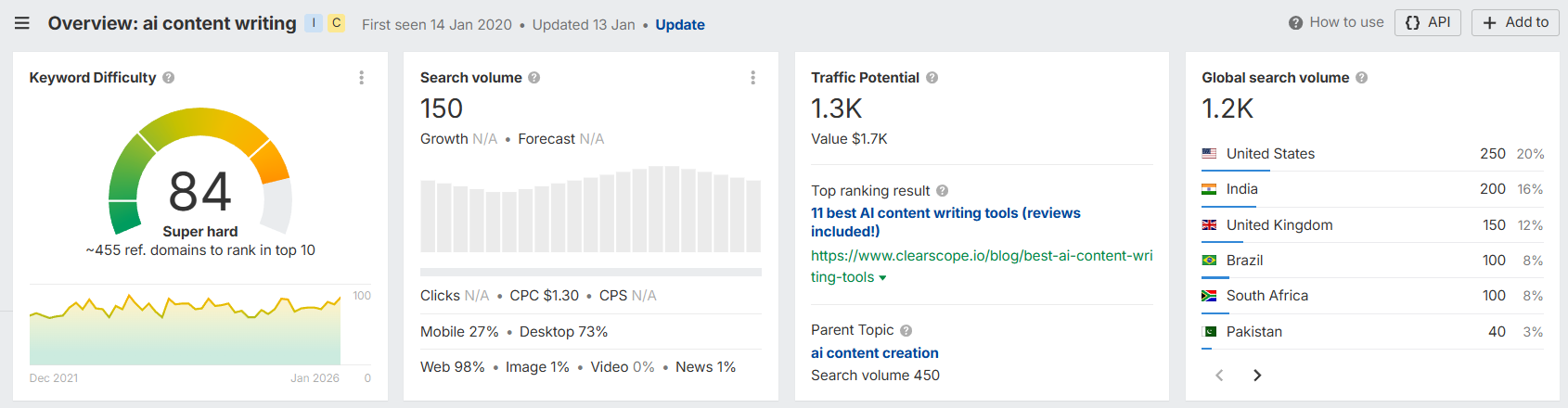
From there, I’ll use AI to expand that topic into more specific searches people might actually type. This quickly turns one broad idea into things like:
- how to use ai to write blog posts
- ai content writing for seo
- can ai-written content rank on google
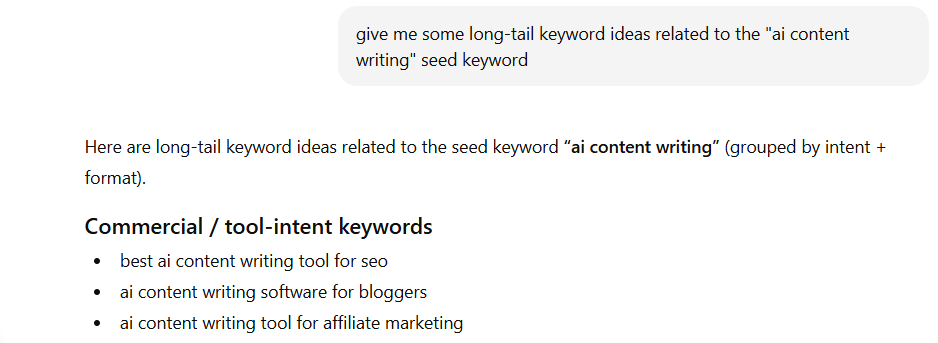
At this point, I’m not worried about accuracy or volume. I’m just generating possibilities.
Next, all of these go into Ahrefs or Google Keyword Planner. That’s where I check search volume and keyword difficulty. This is where a lot of keywords drop off.
For example, “seo content writing” might have high volume but extremely high competition. On the other hand, “seo friendly content writing services” might have lower volume, but a much lower difficulty score and a realistic chance of hitting the top 10.
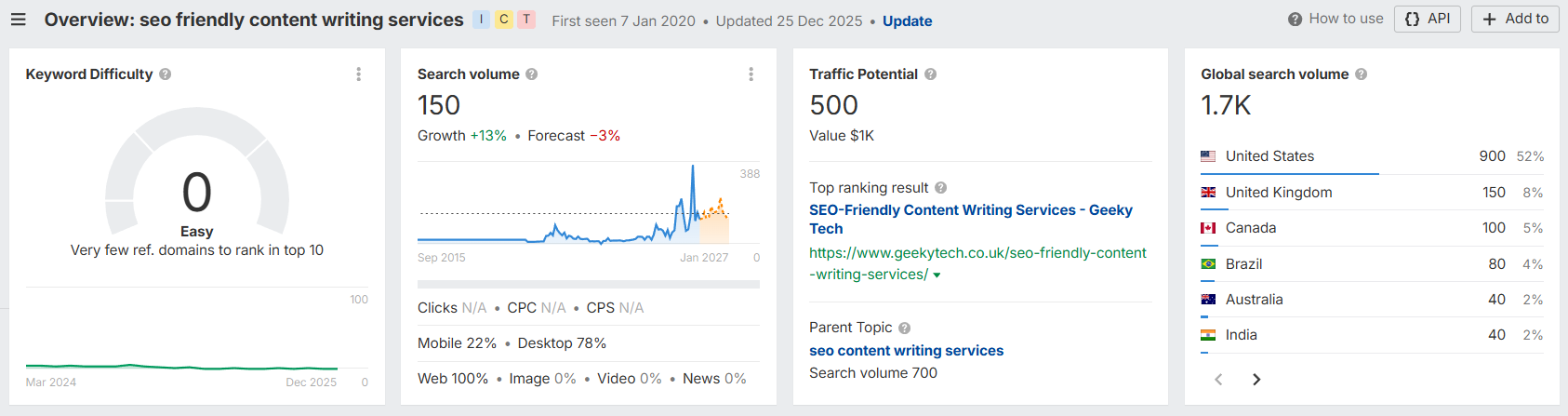
That’s the kind of trade-off I’m looking for.
Long-tail keywords usually win here because they narrow intent. Someone searching “ai content writing” could be looking for anything. Someone searching “how to use ai to write blog posts” is clearly trying to learn something specific, which makes it easier to create a page that satisfies the query.
I also look closely at question-style keywords. Queries like:
- is ai content bad for seo
- does google penalize ai content
- can ai replace content writers
These tend to have lower competition and line up well with voice search and AI-driven queries. They’re often ignored by larger sites chasing bigger terms generic keywords or running Google Ads campaigns.
Another strong source is competitor research. If I see similar sites ranking for keywords like “ai content optimization checklist” or “ai seo content workflow”, that’s a signal those terms are achievable as a secondary keyword target.
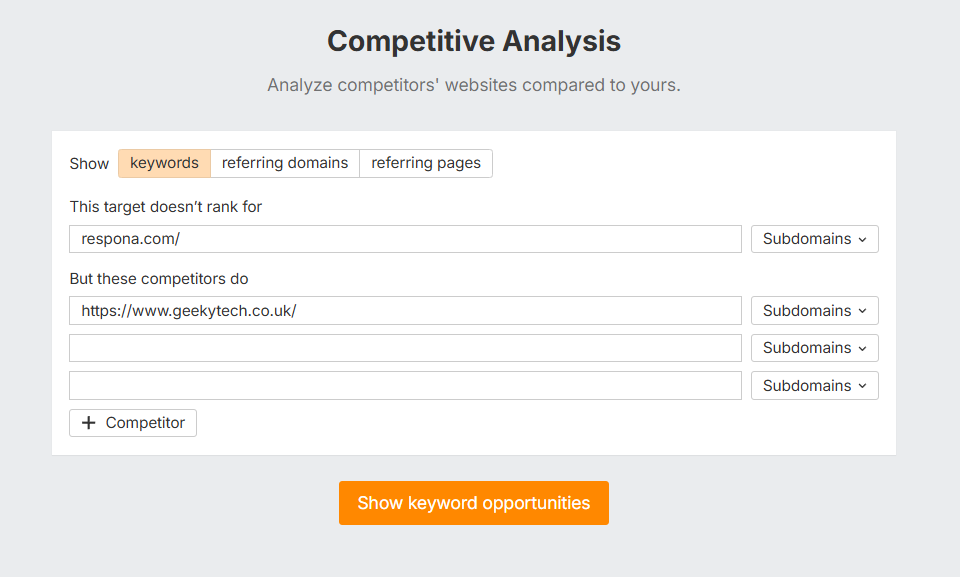
Once I have a list, I clean it up. I group related keywords and LSI keywords that answer the same question together so I don’t create overlapping pages. Then I prioritize keywords that combine three things: clear intent, manageable competition, and enough traffic to be worth the effort.
Best practice tip: While optimizing your content, avoid keyword stuffing at all costs. Instead, focus on keyword usage that feels natural. Include your primary keyword in the title tag and meta description, maintain a healthy keyword density (typically 1-2%), and use medium-tail keywords to support your main target.
Tools like Yoast SEO and MarketMuse can help monitor your keyword phrase placement without overdoing it. Remember, negative keywords in paid campaigns and relevant keywords in organic content serve different purposes in digital marketing.
Whether you’re optimizing for real estate content, social media posts, or a blog post, the key is using your SEO keyword strategically across your meta tags while keeping the search term natural in the body text. Check your search console data regularly to see which keyword types are performing best.
Link building cheat sheet
Gain access to the 3-step strategy we use to earn over 86 high-quality backlinks each month.
Now Over To You
Keyword length isn’t something to overthink.
Longer keywords are easier to rank for, line up better with how people actually search, and are still one of the fastest ways to get into the top 10. If you stack enough of them, the traffic adds up quickly.
But even the best keywords won’t do much if your pages never move up.
That’s where links come in.
Our done-for-you link building service helps your content climb by securing real links and listicle placements on relevant sites. You focus on targeting the right keywords. We focus on getting your pages noticed.
If you want your keyword strategy to actually translate into rankings, that’s the missing piece.
Frequently Asked Questions (FAQ)
How long can a keyword be?
There’s no technical limit. A keyword can be two words or a full sentence. If people search for it on a search engine, it counts.
What’s considered a long-tail keyword?
Long-tail keywords are usually five or more words and describe very specific intent. They’re less competitive and easier to rank for than short, broad terms.
Are very long keywords worth targeting?
Yes, as long as they have search demand. Question-based and sentence-style keywords often have lower competition and clearer intent.
Do longer keywords get less traffic?
Individually, yes. But they’re easier to rank for, and targeting many long-tail keywords can drive more total traffic than chasing one short keyword.
Does keyword length matter for voice search?
It does. Voice searches are usually full questions or complete sentences, which naturally makes them longer and more conversational.
[ad_2]
Source_link