[ad_1]
Plus: Google reverses policy after a parent’s viral post; Cava embraces fan craze over sweet potato return.
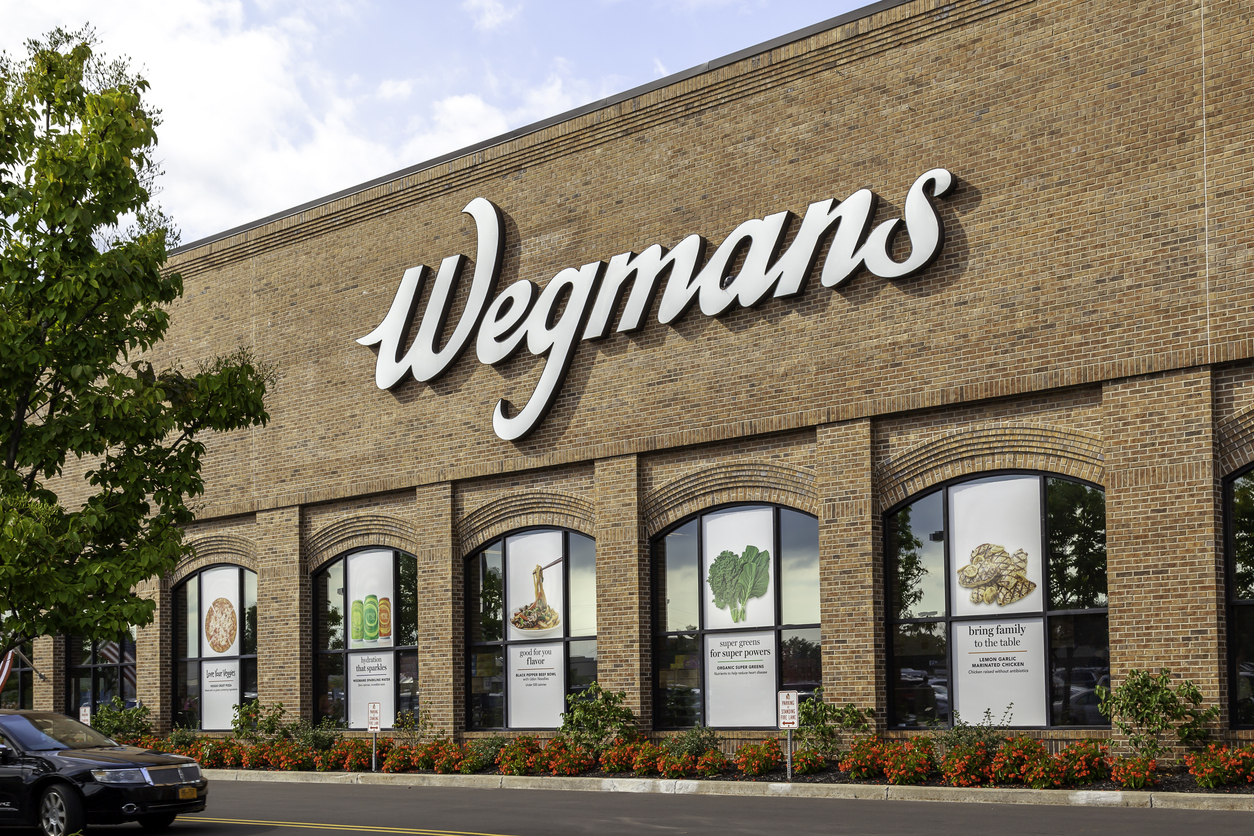
Last week, shoppers at Wegmans locations in New York City began noticing posted signs stating that the grocery chain was collecting biometric identifier information, including facial scans, on customers entering the store.
The notices, which appeared at entrances to Manhattan and Brooklyn stores, warn that cameras equipped with facial recognition tools may collect and store biometric data to “identify or help identify” individuals for security purposes.
The revelations spread quickly online, with shoppers sharing photos of the notifications and debating what the technology means for everyday grocery trips.
Some customers expressed discomfort at the idea of being scanned while shopping, worrying that it feels “invasive” or like “surveillance,” especially without clear information on how long data is stored or what it could be used for, CNN reports.
In response to the uproar, Wegmans issued a statement clarifying its approach and emphasizing that customer safety was its top priority. The chain said it has deployed facial recognition cameras only in a “small fraction” of stores that it considers to have an elevated risk of misconduct, and that the technology is “solely used for keeping our stores secure and safe.”
They added: “We do not collect other biometric data…and video are retained only as long as necessary for security purposes…
“We understand concerns about fairness and bias in facial recognition systems. We employ a multitude of training and safety measures to help keep people safe. Facial recognition technology serves as one investigative lead for us. We never base our decisions on a single lead alone.”
Why it matters: CNN pointed out that it was rare for Wegman’s to release a public statement on this topic. Clearly, the company understood why it was critical to address the issue at a time when people have heightened concerns over privacy.
The statement opens with an emphasis on safety. That immediately grounds the response in a value most people agree on. Framing the issue around people instead of surveillance helps lower defensiveness and signals responsible intent.
The statement also does an effective job of limiting fear by emphasizing how restricted the use is. This helps prevent audiences from assuming this is a company-wide, always-on tracking system.
The brand further explains exactly what the technology does and more importantly, what it does not, helping to clarify its function openly and transparently.
The paragraph acknowledging concerns about “fairness and bias” is especially smart. By recognizing the issues and explaining safeguards like training and no single data point driving decisions, the company shows awareness and responsibility, which can help defuse public scrutiny.
Overall, Wegman’s response works because it is calm, factual and emphasizes its values. It doesn’t apologize but it’s not defensive either. Instead, it explains the practice, limits its scope, acknowledges concerns and reinforces trust.
Editor’s Top Reads:
- Google is rolling out a change to its Family Link parental-control settings this week after a parent took to social media and said her child received an email from the company explaining how to turn off parental supervision on their own, without parental approval. When a child nears the age of 13, they have the option to bypass previously set parental settings, the email explained. Many moms and dads found this alarming and undermining. Concerned parents claimed Google was circumventing parental authority and inviting kids to “graduate” from supervision on their own terms. In response, Google’s Kate Charlet wrote on LinkedIn: “Under our planned policy update, any supervised minor will have to get parental approval before they can turn off supervision. These changes better ensure protections stay in place until both the parent and teen feel ready for the next step.” While the tech giant corrected course and clarified a new policy, it took a viral social post for them to address it. Charlet did emphasize that Google’s policies are “transparent by design” and that the goal is to include parents on “what’s right for their families.” By reiterating safety and inclusivity, along with reversing the policy, Google is aiming to avert reputational harm and distrust and show its customers that it hears their concerns.
- Cava has given in to its cutomers’ demands to bring back white sweet potatoes. This week, Cava launched a T-shirt to celebrate the return of sweet potatoes for “the ultimate white sweet potato fanatic.” On Instagram, the company shared several images of the shirt, which has, “I SURVIVED. SWEET POTATOES ARE BACK” printed in bold lettering along with a silly paragraph about surviving the past 582 days without them. “You never gave up. You persevered. You fought like hell. Your hard work brought sweet potatoes back and the world should know it,” Cava captioned the post. With the launch of the T-shirt, Cava is showing it actually listens and responds to its fans, not with a press release, but with humor and personality. White sweet potatoes weren’t a crisis, but they became a running joke and a shared pain point in the comments. By leaning into that demand and celebrating the return with an over-the-top shirt and fun copy, Cava turned a small menu update into a brand moment. It makes customers feel seen, heard and rewarded for caring. As one IG user put it: “The drama is just perfection. #warisover.”
- Late last week and into the weekend, millions of Instagram users got unexpected password reset emails, sparking widespread worry that the platform had suffered a major security breach. Some cybersecurity firms claimed that data from roughly 17 to 20 million accounts had been stolen and was circulating on the dark web, which added fuel to the panic. In response, Instagram and Meta publicly denied a systems breach. They said, “We fixed an issue that let an external party request password reset emails for some people. There was no breach of our systems and your Instagram accounts are secure.” The company quickly patched the problem and told users they could safely ignore the unsolicited emails. By addressing the issue directly on social platforms and reassuring users that account security was intact, Instagram aimed to calm what could have become a much bigger reputational crisis. The messaging could have been even stronger though with more detail on how the issue occurred and what users should specifically do to protect themselves, like turning on two-factor authentication, but overall the company managed to contain fear and redirect the narrative before misinformation could take root.
Courtney Blackann is a communications reporter. Connect with her on LinkedIn or email her at courtneyb@ragan.com.
The post The Scoop: Wegmans transparently addresses use of facial scan technology appeared first on PR Daily.
[ad_2]
Source_link