[ad_1]
Meta Advertiser Field Notes
Thursday observations from inside Meta ads
These are smaller things I noticed while running and managing Meta ads over the past week. Some are new features or things I discovered. Others come from specific projects I’m working on. None warranted a full post on their own, but all are worth paying attention to.
- Breakdown by attribution
- What happened to the image generation breakdown?
- Quality leads: Ads vs. organic
- Dataset Quality API
- Bid Cap definition change
- Should you delete inactive ads?
- Results without spend or impressions
- No link ads on desktop Threads
Let’s get to it…
1. Breakdown by Attribution
No, I’m not talking about the Compare Attribution Settings feature, which I love. Meta seems to be rolling out a new breakdown specifically for attribution.
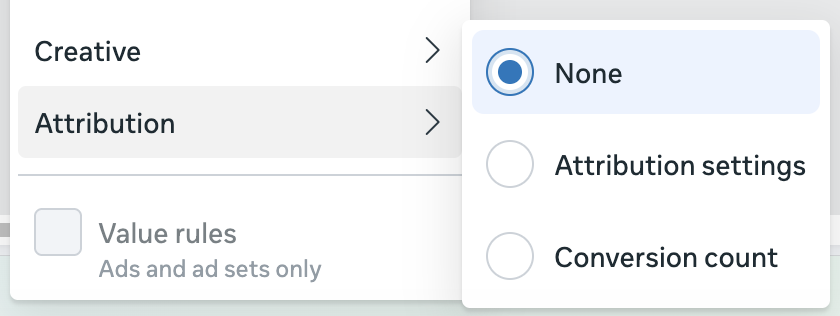
Here’s how Meta describes the two options…
Breakdown by Attribution Settings: View your data by attribution setting to see your conversions for various time windows and engagement types.
Breakdown by Conversion Count: View your data by conversion count to see the first conversion or all other conversions that happened after someone clicked or viewed your ad. (Read more about First Conversion and Conversion Count)
This isn’t necessarily different data from what you’ll get when comparing attribution settings, but it is presented in a new way. Compare Attribution Settings adds columns of data, whereas breakdowns generate separate rows.
Unfortunately, I only have this in one ad account, and it’s a test account with no data (not helpful, I know). But Bram Van der Hallen has it, and he shared some screenshots on LinkedIn.
As soon as I have this, I’ll share more.
2. What Happened to the Image Generation Breakdown?
A few months back, I documented an option to break down your results for AI-generated images.
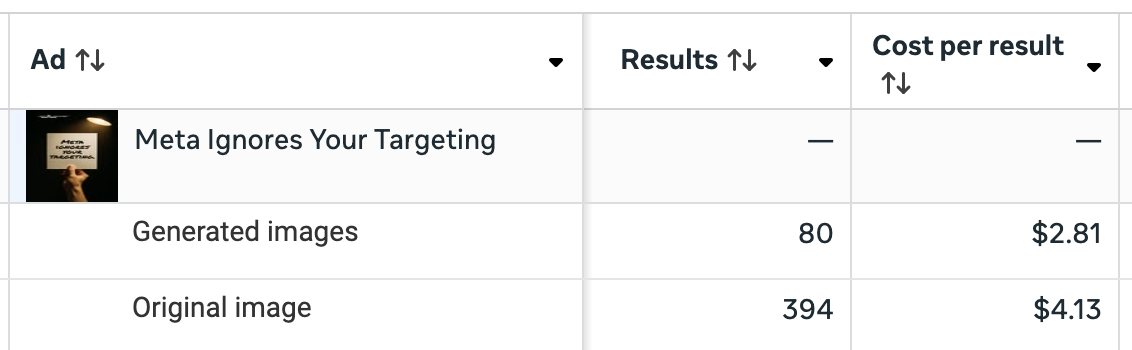
It was great because it provided some transparency into what happens when you select Meta’s AI-generated image and background options. In my case, I was surprised by how well those images did. And it also showed that Meta still relied mostly on the image I provided.
That Image Generation breakdown option was found under a new Creative category.
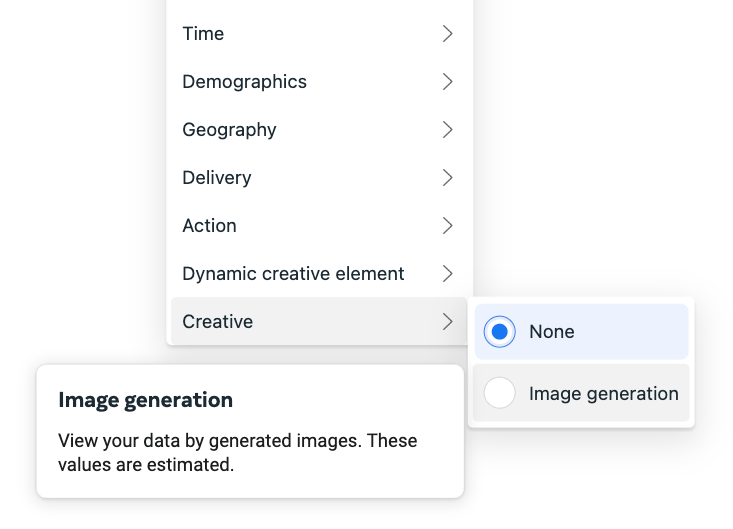
Eventually, Meta would add breakdowns for Related Media and Flexible Format to this category. But now, the Image Generation option is gone.
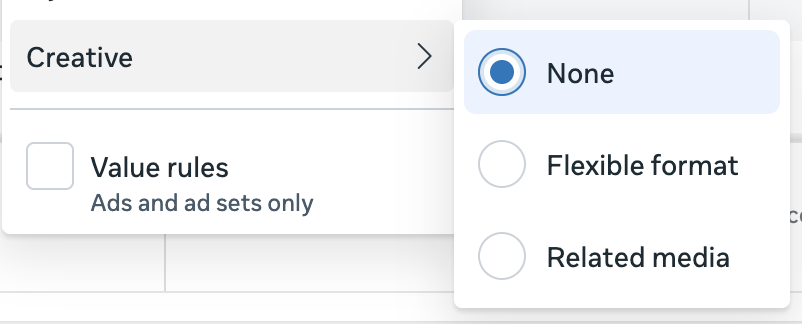
I’ve looked around, and I’m not seeing this option for any account. What happened? Was it just a test? Did Meta decide it’s not ready? Does anyone still have it?
I’m hoping it comes back. It was useful.
3. Quality Leads: Ads vs. Organic
Something I’ve been obsessed with during the past six months or so is improving lead quality. I’ve focused on a long list of ways to impact this, covering my ads, landing page, and CRM automations.
From an advertising perspective, I’ve experimented with optimizing for a second action, rather than completing the form itself. I’m using this with my new free mini-course on Meta Andromeda. The action I ultimately want is for this new lead to open their email from me and click the link to access the lessons. That indicates a quality lead who is engaged and reachable later.
During this test, I’ve set things up in a way that makes it easier to compare the differences in leads from ads to those who subscribed organically. Since I have a sizable number of subscribers already, these differences are potentially meaningful.
I launched this mini-course on January 6th, so it’s only been about a week. But here’s what I have so far…
From Ads:
- Leads: 312
- Accessed Lessons: 124
- Quality Leads: 39.7%
Organic:
- Leads: 530
- Accessed Lessons: 346
- Quality Leads: 65.3%
First, some important background is required.
This data is incomplete. It’s only been a week, and a new lead today may not access the lessons today. I have reminder emails that go out for two days after the initial welcome email. These numbers will climb and will be closer to complete as a smaller percentage of the pool consists of new subscribers.
It’s also to be expected that organic would be a higher quality. Understand that a large chunk of this group acted on an email I sent. These were people who were already on my email list, so it makes sense that they’d be more likely to act on a future email.
All of this is true, but I’d still like to get that lead quality up from ads. One of the challenges we don’t think about enough is related to deliverability. If someone is a new subscriber, there’s no guarantee that my email will go to their main inbox. So I’ve been focused on everything from instructions on the confirmation page to crafting my email in a way that gives it the best chance of avoiding the Promotions folder.
This is all a reminder that lead quality is a multi-layered, complicated topic. We have so many potential levers to impact it, and many of those levers have nothing to do with the advertising at all.
I’ll certainly come back to this experiment later.
4. Dataset Quality API
I pride myself on being on top of every change and new feature, but I seemed to miss this one. I spotted it in my Events Manager settings…
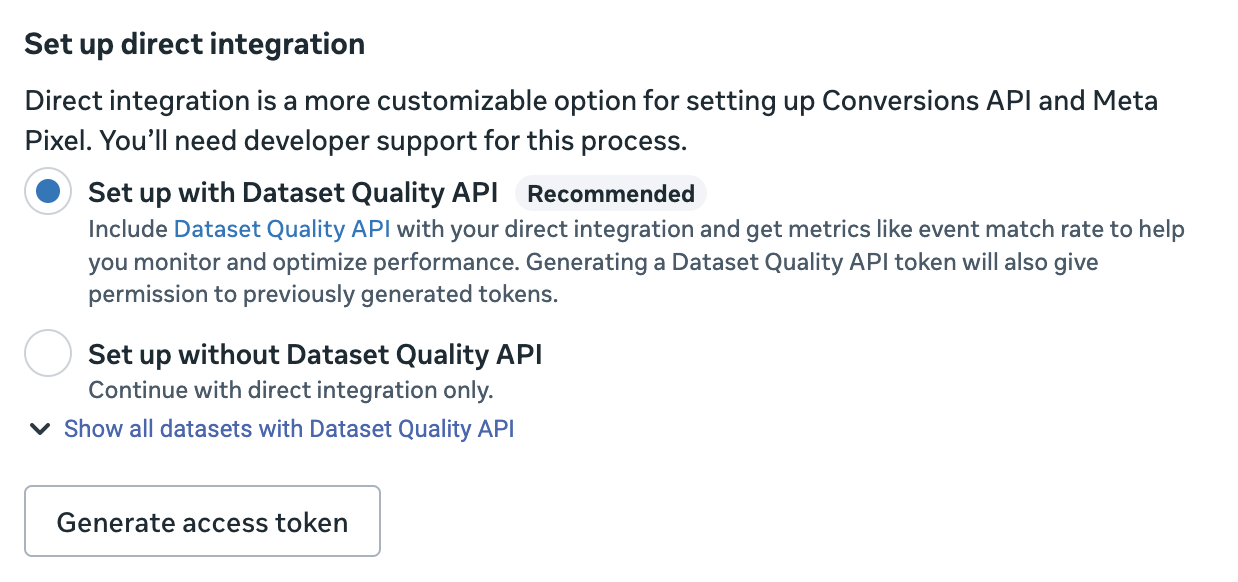
From what I can tell, Dataset Quality API has been around for about six months.
Not to be confused with Conversions API, Signals Gateway, or even Marketing API, Dataset Quality API was designed to help agencies monitor the quality of the data that clients are sending via Conversions API.
Here’s Meta’s explanation for common use cases:
Partners and agencies may use the Dataset Quality API to provide a quality dashboard and insights, while helping their advertisers to enhance and optimize their integrations. Partners may also use this integration to monitor the stability of their Conversions API integration. Advertisers may use this endpoint to aggregate dataset quality data to incorporate in their monitoring.
I haven’t seen an example of this, but it seems to leverage much of the data we can otherwise see in Events Manager:
- Additional Conversions Reported
- Event Coverage
- Event Deduplication
- Data Freshness
- Event Match Quality Diagnostics
While Events Manager provides this information, you have to dig through each event for a single client to get there. My guess is that using the API, you could conceivably set up dashboards to make all of this information more accessible and useful.
Again, it’s still new to me. But that’s my assumption.
5. Bid Cap Definition Change
For the second time this week, my reputation for being on top of things may have been challenged.
During a recent strategy session (join us for a future session!), a member brought up the prospect of using Bid Caps. The way she discussed it, as a way to control the Cost Per Result, I assumed she meant Cost Per Result Goal. Bid Caps were all about controlling your bids on impressions in the auction.
Or, at least, that’s what I thought they were. Because they were at one time. Meta discouraged advertisers from using it unless they had deep marketing insights into what Bid Caps they should use. In an old blog post, I documented that “Bid Cap is considered the ‘very advanced’ method” and “better for the most sophisticated advertiser with high volume and a deep understanding of KPIs and costs.”
Anyway, that’s not how Bid Cap is defined now. Here’s the short definition:
Rather than specifying a max bid per impression, a bid cap specifies a maximum value for the Bid Per Estimated Action (not per impression).
Previously, it was based on the impression, which is what made it advanced and complicated. At least, that’s how I interpreted it.
Cost Per Result goal defines the average Cost Per Result that you want to stay around. A Bid Cap establishes a cap on the most you are willing to pay per result.
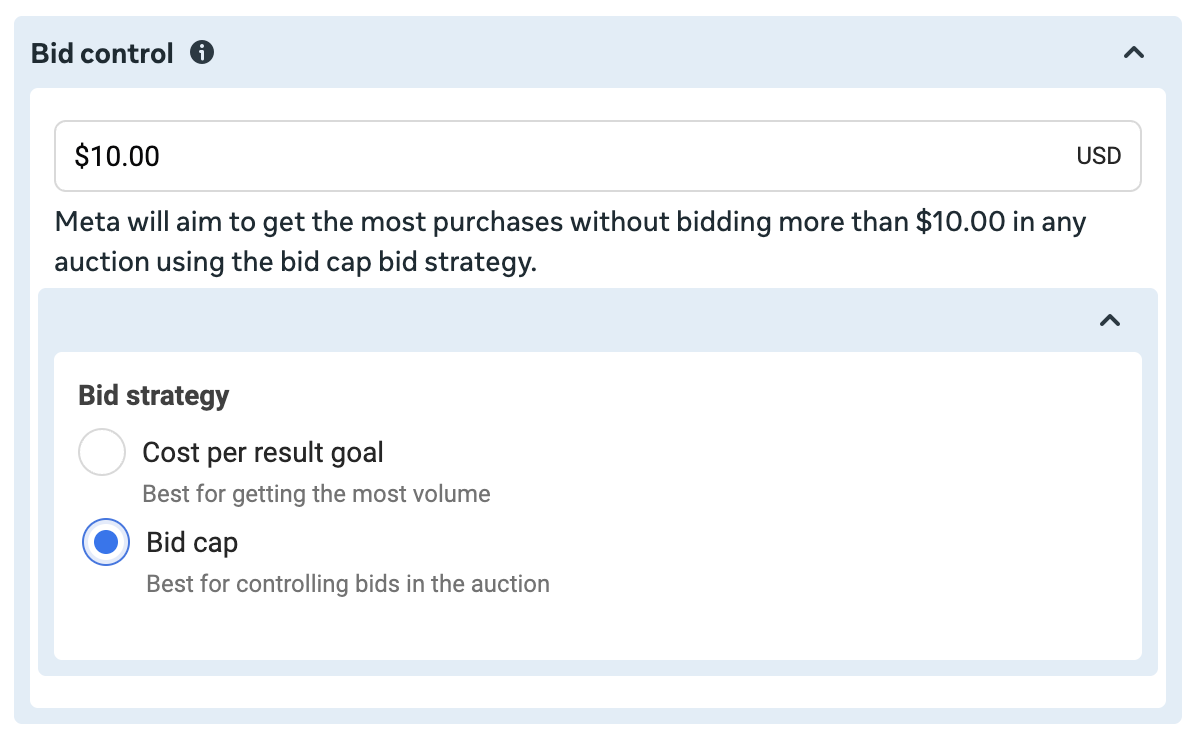
Look, maybe I misunderstood Bid Caps this whole time. It’s always possible. But at the very least, Meta changed how they explain it. And it’s much clearer now than it was previously.
6. Should You Delete Inactive Ads?
I spotted a new alert at the top of my Ads Manager that caught my attention…

If you’re struggling to read it, here’s what it says:
Improve how fast your campaign is loading by deleting inactive ads
Campaigns with over 200 ads may load slower. Consider deleting inactive ads to improve how fast this campaign is loading.
When I clicked to review the ads I could delete, I was shown a screen that looks like this…
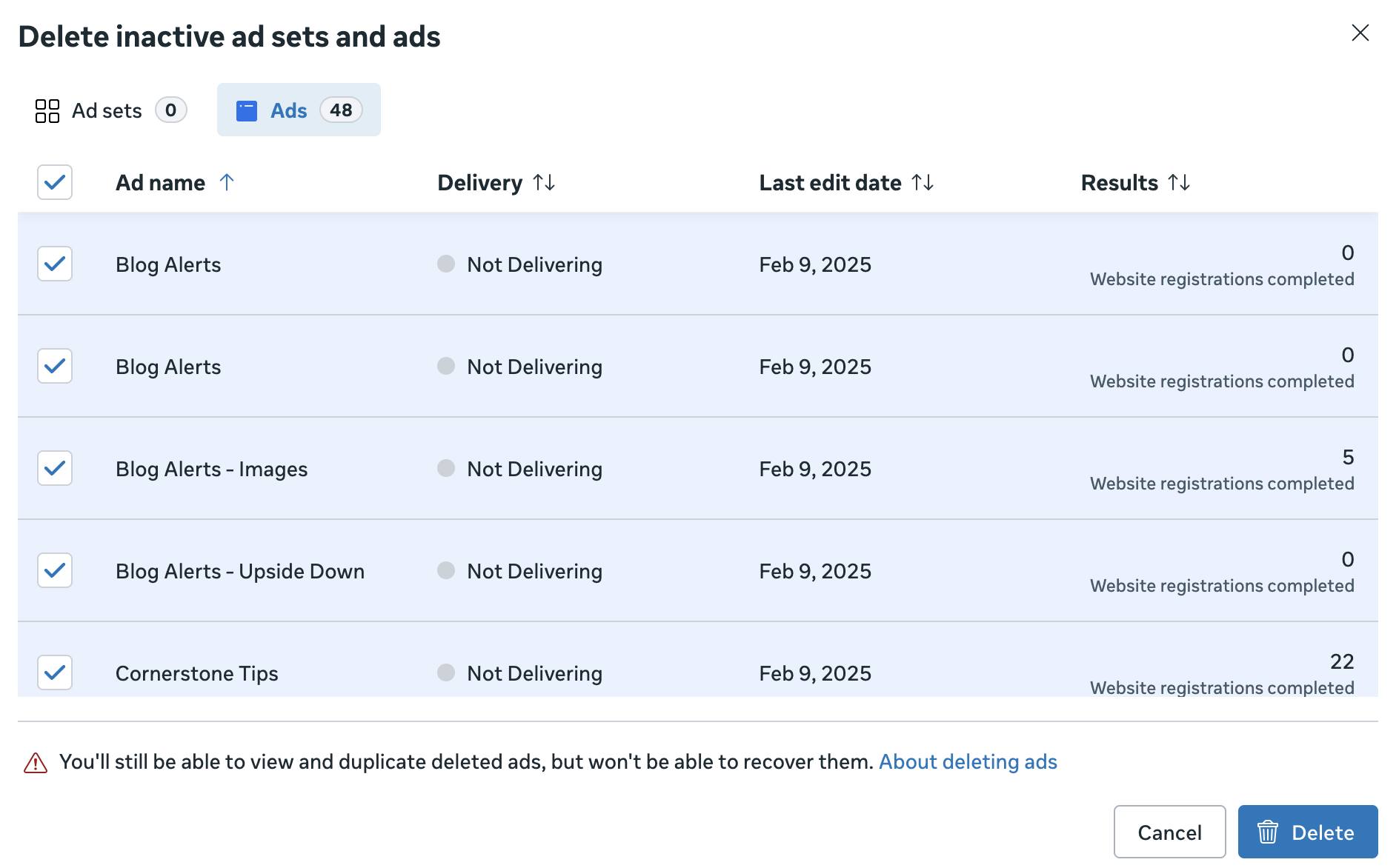
So, there are a couple of things to unpack here. First, if you’re having issues with Ads Manager loading, it could be related to the number of ads — both active and inactive. Meta seems to suggest that campaigns with over 200 ads may load slower. Since there is a limit of 50 ads per ad set, that would mean a campaign with multiple ad sets totaling 200 ads.
The campaign in question does indeed have more than 200 ads (270 in all), driven primarily by inactive ads. But should I really delete the inactive ads?
Meta provides a link to documentation that explains what happens when you delete an ad. Here’s a key paragraph:
After you delete campaigns, ad sets and ads in Meta Ads Manager, you won’t see them in the default view in Ads Manager, Ads Reporting or Ads Manager app. You can’t restore deleted campaigns, ad sets or ads, but you can duplicate them and view them using search filters.
In other words, kind of a drastic step. You can still view deleted ads when using a filter.

But I’d certainly consider this a last resort. You may otherwise want to create a new campaign once you begin to approach 200 ads (this is mostly a message for myself).
7. Results Without Spend or Impressions
When viewing performance by an individual day, you may notice something unusual.
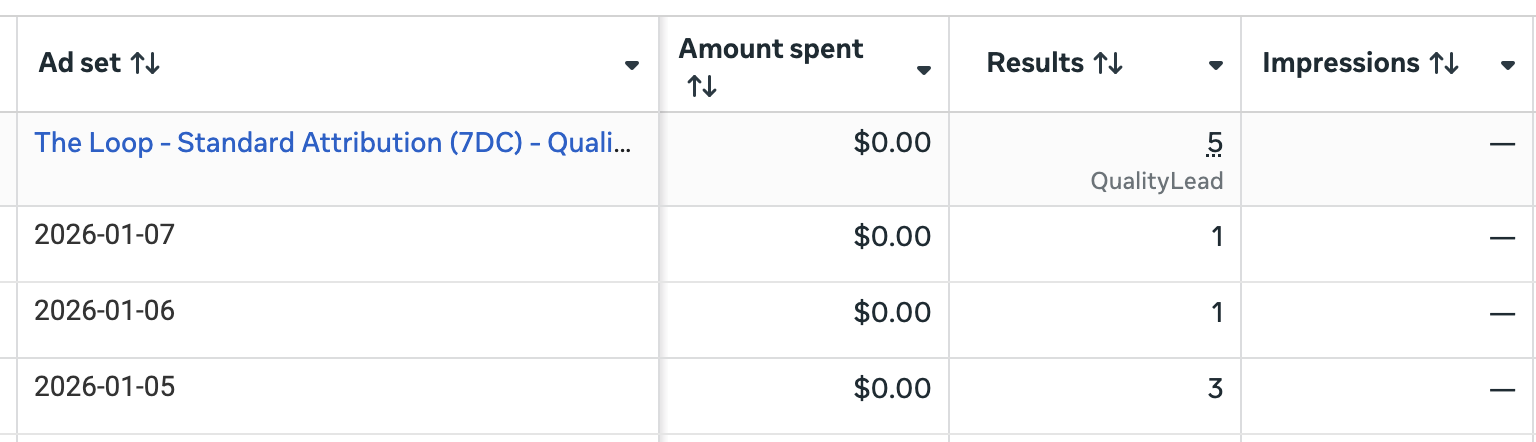
In the example above, Meta reported five conversions during a three-day period when there was no ad spend and no impressions. How is this possible?
This is directly tied to the attribution setting. In this example, I had defined attribution in the ad set as 7-day click. This means that Meta will report on all conversions that happen within seven days of clicking an ad.
This ad set stopped delivering at midnight, the morning of January 3rd. If someone clicked on an ad on January 2nd, a conversion would be reported if they end up completing the action by January 10th. And when that happens, the conversion will be reported for the day that the action was completed — not the day of the initial click.
It’s a small thing, but this is also a reminder of why we shouldn’t obsess over daily metrics, especially for new ad sets. Your results for a time window aren’t complete until you’ve exceeded the attribution setting. This is easy if you’re using 1-day click, but not when using 7-day click.
When using 7-day click, focus on 7-day reporting windows while evaluating performance. Even better, use a 7-day window that had delivery during the preceding 7-day window.
8. No Link Ads on Desktop Threads
I typically use Threads from my laptop, and I spotted something in my notifications that initially concerned me.

Someone had engaged with one of my link ads. When I pulled up the post in my desktop notifications from the Threads website, the post featured only text and a static image. There was no link. When the image was clicked, it didn’t go anywhere.
If people are seeing this version of my ad, that’s obviously bad. But there was no evidence otherwise of a problem. Nothing was off in my setup. Conversions were reporting normally.
When viewing that same notification from the Threads app on my phone, the link appeared as it should.

So, what was happening? A breakdown of my results by platform and device pointed me in the right direction.
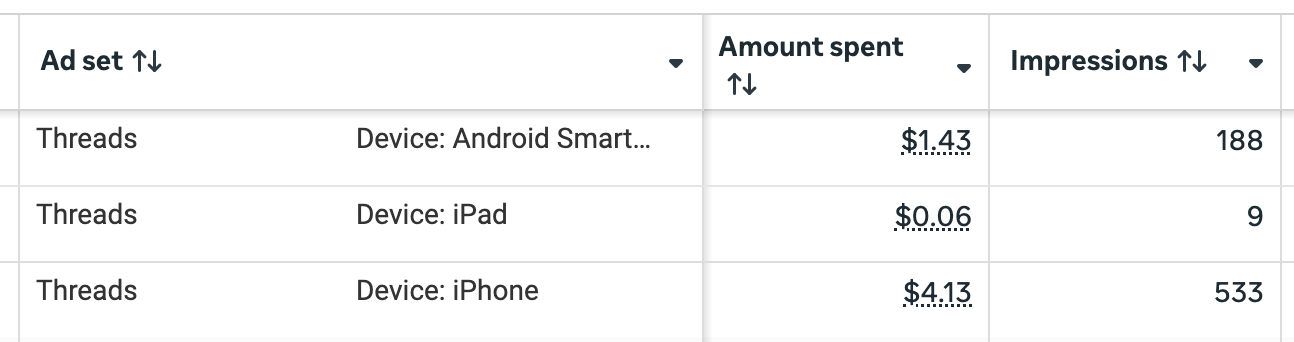
All impressions for this ad that appeared in Threads Feed only appeared on mobile devices. In fact, I haven’t seen any ad impressions on desktop from Threads.
That tells me that Threads ads are only being delivered to mobile right now. I’ll still get notifications when using Threads on my laptop, but it won’t render properly with the link.
That was reassuring. It also means that the full rollout of ads to Threads isn’t yet complete.
More to Come
I’ll be sharing observations like these every Thursday, as long as Meta keeps shipping changes faster than they explain them.
[ad_2]
Source_link