[ad_1]
Accuracy doesn’t come at the expense of engagement.
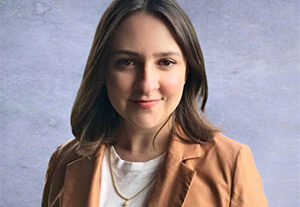
At the National Academies of Sciences, Engineering, and Medicine, Megan Lowry employs her over 10 years of public affairs and public relations experience in Washington, D.C. to promote science that shapes national policy. Lowrey specializes in achieving accurate media coverage for complex and technical topics – everything from genetics research to AI and space exploration – with strategic placement in top national outlets.
Each year, she coaches hundreds of scientific experts at the top of their field on how to best communicate their work to the media and public. She also advises leadership on communications strategy, including reputation management. Lowry holds a Bachelor of Arts in international relations from American University.
You’ve spent your career helping make complex science understandable for everyone. How do you strike a balance between keeping it accurate and engaging?
I think many scientists see accuracy and accessibility as being in opposition with one another, and that to achieve one you have to sacrifice the other. In my experience, that is one of the biggest misconceptions and missteps that I see in science communications.
When I do media trainings for top academics, I remind them that most audiences — no matter their scientific training or expertise — want to appreciate the complexity of an expert’s work. Many of us are expecting not to understand the full picture when met with a new subject.
In my experience, the idea that accuracy can’t be engaging is not true. The key is for science communicators to use language that people are familiar with but take the time to give them the background and context they need to appreciate why a breakthrough or singular piece of research is significant. And it can truly be risky to put a press release or announcement out there that is exaggerated or overstated in the pursuit of making it “engaging.” Reporters and experts will catch it, and you’ll lose trust if that happens.
So I focus on dropping the jargon and keeping the complexity, describing scientific findings with language, context and examples that anyone can relate to.
You coach so many experts every year on talking to the media. What’s one piece of advice you find yourself repeating the most?
The advice I find myself repeating the most in media trainings is to go into any interview knowing who it is you’re talking to. Not just the reporter on the other end of the phone but their readers or audience. Your main messages for a new study or topic may be the same across interviews, but changing up key parts of an interview, like your call to action, the examples you use to illustrate how an area of science works, etc. should all be tailored to who those readers are. Talking to the audience of a physics-focused Substack is so different from talking to the audience of NBC Nightly News, and keeping your answers relevant to the audience is how you take an interview from “good enough” to creating a moment that will really stick.
Science communication can feel challenging these days, with a wealth of misinformation out there. What’s worked for you when it comes to building public trust?
This is definitely a roadblock that many PR professionals working in science or health communications will face at one point or another. I think when working in areas with a lot of misinformation out there, it can help to acknowledge your audience’s doubt or uncertainty, embrace it and address it. Meet your audience where they are, and you will be much more successful when you ask them to listen to what you have to say.
It’s also clear that as trust in institutions declines, communicators need to have a better reason for why people should be listening to and believing a message than a job title or organization’s name. We can’t rest on a legacy brand or longstanding reputation and assume someone will believe what we’re saying because of it. You need to take the time for each new audience and message to explain yourself fully and show that you’ve really done the work required for them to believe you.
Misinformation is a global, systemic problem that no one organization or PR professional can overcome on their own. Staying focused on a specific message and a specific audience can also help the problem seem less overwhelming.
You’ve worked in D.C. for over a decade — how have you seen the relationship between journalists and scientists change in that time?
In a word: immensely. So many great voices and platforms in journalism have disappeared over the last decade. Today, that shrinking pool of journalists has the same number of media relations contacts and experts, if not more, all trying to get their message out there. I think the best way to respond to this change, in my experience, is to stick to a very targeted media relations strategy whenever possible. Taking the time to find the five reporters already writing about your issue and developing a relationship with them is going to be a better use of time than blasting something out to hundreds of reporters at once.
One constant throughout that time is that science and health reporters are more committed than ever to understanding technical topics and getting them right. I work with so many journalists who will find the time to ask clarifying questions of experts or wait to publish until they get more context, and I think news consumers benefit greatly from that commitment.
Outside of work, what keeps you curious or inspired?
I am an obsessive gardener. I love finding varieties that are rare or new to me and seeing what I can do with them. There is an endless well of information to learn about plants and growing your own food, and my garden is my own little backyard science project where I get to nerd out and try new things every season.
If you could tell your younger self one thing about working in communications, what would it be?
Find something you love to read and write about and focus on working in that space. It is so much easier to pick up new skills, try new things and push yourself when the content you’re dealing with is something you find genuinely interesting and important.
Isis Simpson-Mersha is a conference producer/ reporter for Ragan. Follow her on LinkedIn.
The post How the National Academies’ manager of media relations turns research into stories that shape policy appeared first on PR Daily.
[ad_2]
Source_link