
Most people think SEO copywriting is complicated.
It’s not.
It’s structured.
There’s a big difference.
When content doesn’t rank, it’s usually not because the writing is bad. It’s because the basics were skipped.
The keyword wasn’t researched properly. Search intent wasn’t matched. The title tag wasn’t compelling. The meta description didn’t earn the click.
Or the page was never even submitted to Google Search Console.
Good SEO copywriting isn’t about tricks. It’s about following a repeatable checklist every single time you publish.
This is the exact SEO copywriting checklist I use to write content that ranks in search engine results without overthinking it.
Key Takeaways:
- Strong keyword research and matching search intent matter more than keyword density.
- Your title tag and meta description directly impact how you perform in search results.
- Structure, internal links, and user experience help search engines understand your content better.
- SEO copywriting is still copywriting first. If your target audience isn’t satisfied, search engines won’t be either.

Link building cheat sheet
Gain access to the 3-step strategy we use to earn over 86 high-quality backlinks each month.
Wait a Minute, Isn’t SEO Copywriting Just Writing?
Honestly?
Yeah. It kind of is.
SEO copywriting is still just copywriting. You’re writing to persuade, explain, educate, or sell. The fundamentals don’t change. You still need clarity. You still need flow. You still need to understand your target audience.
The only difference is you’re writing with search engines in mind too.
That means you’re not just asking, “Is this good writing?”
You’re also asking:
- Does this target the right keyword?
- Does it match search intent?
- Will it compete in search engine results?
- Is the title tag clear and compelling?
That’s where the “extra steps” come in.
A good SEO copywriter understands that search engine optimization isn’t about gaming Google search. It’s about structuring content in a way search engines can understand while still making it enjoyable for humans to read.
Step 1: Pick Your Keyword
This is where most people either overcomplicate things… or completely wing it.
Don’t wing it.
If you’re serious about SEO copywriting, keyword research is step one. Always.
I almost always go for long-tail keywords. Lower difficulty. Clearer search intent. Way less competition. Ideally, they still have solid traffic.
But even if the volume is low, I’m fine with it.
Because easy wins stack.
One blog post targeting a low-difficulty keyword might not explode overnight. But publish consistently and suddenly your content starts pulling in steady organic traffic without you being stuck on page five of Google search forever.
Here’s how I do it.
First, I open Ahrefs and check the numbers. Search volume. Keyword difficulty. What’s already ranking in the search engine results.
Is this realistic for me?
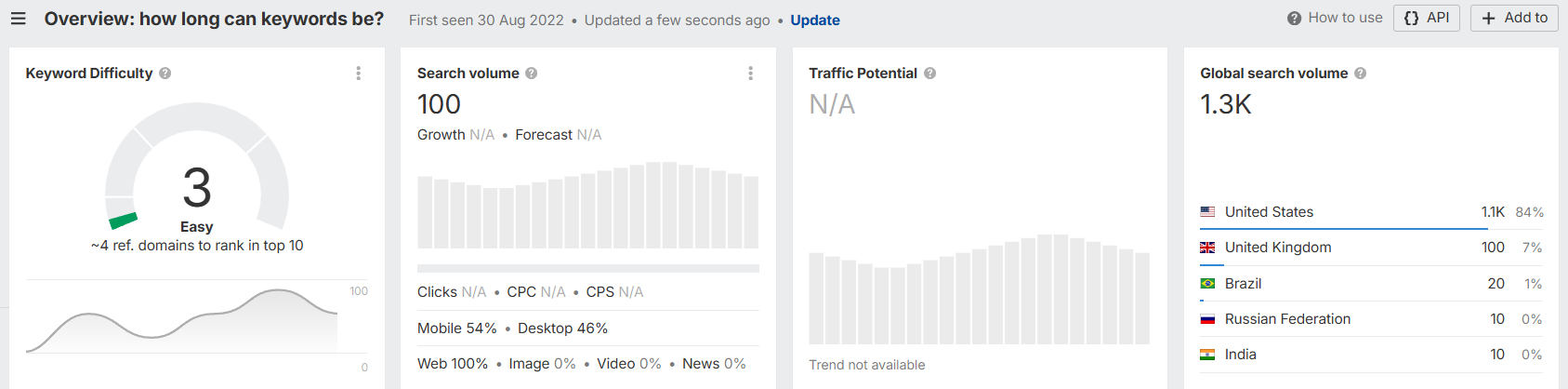
Then I use ChatGPT to expand the idea. I’ll ask it to generate long-tail keyword variations around the main topic. It’s great for brainstorming angles I might not think of on my own.
But here’s the important part: I always go back to Ahrefs and double-check those keyword ideas. Just because an AI suggests something doesn’t mean it has real search volume.
Once I’ve validated it, I lock in:
- One primary keyword
- A clear target keyword variation
- Maybe one or two secondary keywords that fit naturally
That’s it.
No chasing massive, ultra-competitive terms. No obsessing over keyword density. Just picking something that has a realistic shot at ranking in search engine results.
Step 2: Check Search Intent
Before you write a single word, open Google.
Seriously.
Type your target keyword into Google search and look at what’s ranking in the search results.
Are they listicles?
Long-form informational blog posts?
Product pages?
Landing pages?
Comparison articles?
That’s your answer. This article’s target keyword is very clearly informational, but you can’t always tell by just looking at the keyword.
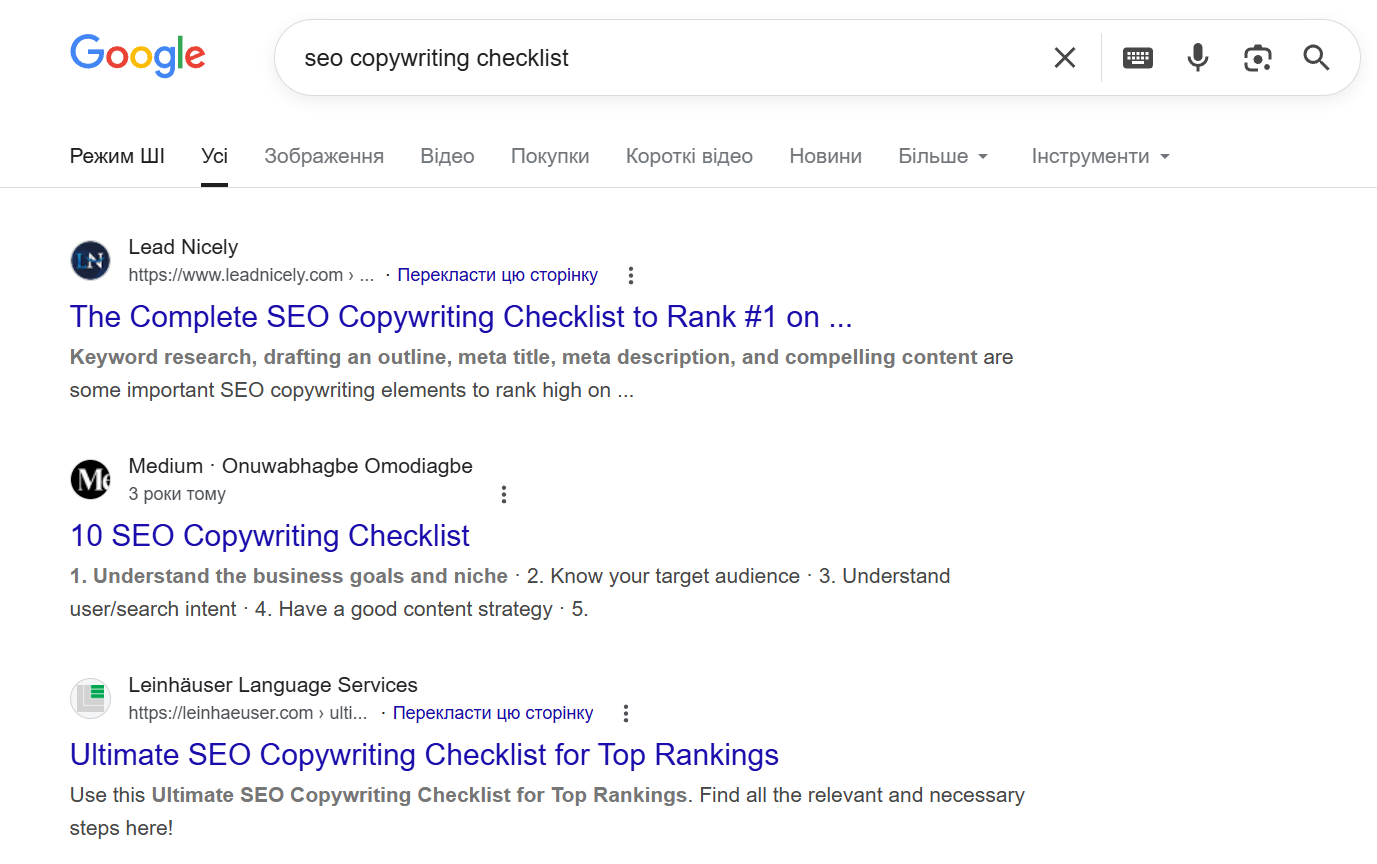
Search intent isn’t something you guess. Google is already showing you what it thinks the user wants. Your job in SEO copywriting is to align with that.
If all the top search engine results are list-style articles and you publish a sales page, you’re fighting the algorithm. If they’re product pages and you write a 3,000-word informational guide, same problem.
Good SEO writing starts with matching user intent.
Step 3: Structure Your Content Like Google Wants to Read It
Once you’ve got the keyword and search intent locked in, structure is everything.
SEO copywriting isn’t just about what you say. It’s about how you organize it.
Search engines don’t “read” like humans. They scan structure. Headings. Sections. Clear answers. Logical flow.
If your content is one giant wall of text, it’s harder to understand and harder to rank.
I like to keep it simple.
- Clear H2 and H3 sections
- Short paragraphs
- Bullet points where it makes sense
- A Key Takeaways section near the top
- An FAQ section at the bottom
Those last two matter more than people think.
Key takeaways help summarize the content for both users and search engines.
FAQ sections help you answer related questions directly, which increases your chances of appearing in rich search engine results or even an AI overview.
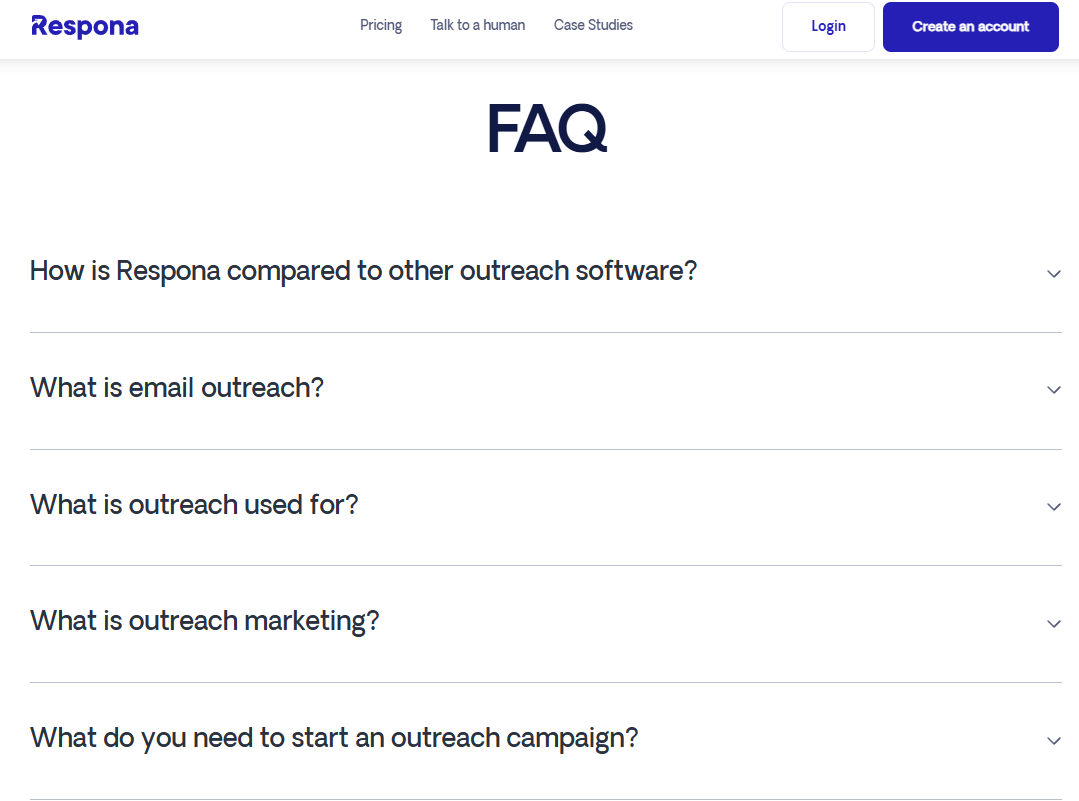
And when you’re writing answers, be straightforward.
If the question is “What is SEO copywriting?” don’t dance around it for three paragraphs. Answer it directly. Then expand.
That’s how you optimize for AI SEO without being robotic.
Step 4: Optimize for Keywords
Now that the structure is there, this is where you tighten things up.
Keyword optimization is not about stuffing your target keyword 27 times into the page. That’s outdated SEO copywriting.
It’s about covering the topic fully.
After I finish writing, I’ll run the draft through a tool like MarketMuse or SurferSEO. These SEO tools analyze the top-ranking search engine results and show you relevant keywords and phrases you may have missed.
This speeds things up massively.
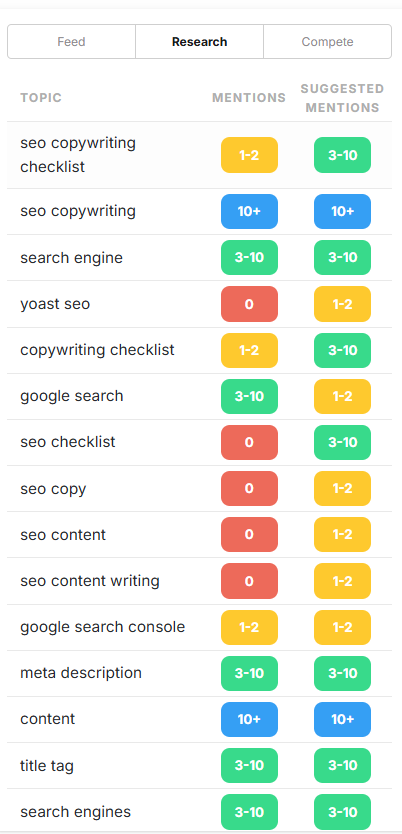
Instead of guessing what to include, you get a data-backed list of terms that are already working in search results.
Here’s the workflow:
- Write the content first. Don’t obsess over optimization while drafting.
- Run it through MarketMuse or SurferSEO.
- Take the suggested relevant keywords and phrases.
- Use ChatGPT to help integrate them naturally where they make sense.
The key word there is naturally.
If a term doesn’t fit the flow, don’t force it. Good SEO writing still has to sound like a human wrote it.
Step 5: Add Internal Links
This step is boring.
And it’s one of the most overlooked parts of any SEO copywriting checklist.
Internal links help search engines understand how your content connects. They also improve user experience by guiding readers to related posts, deeper explanations, or next steps.
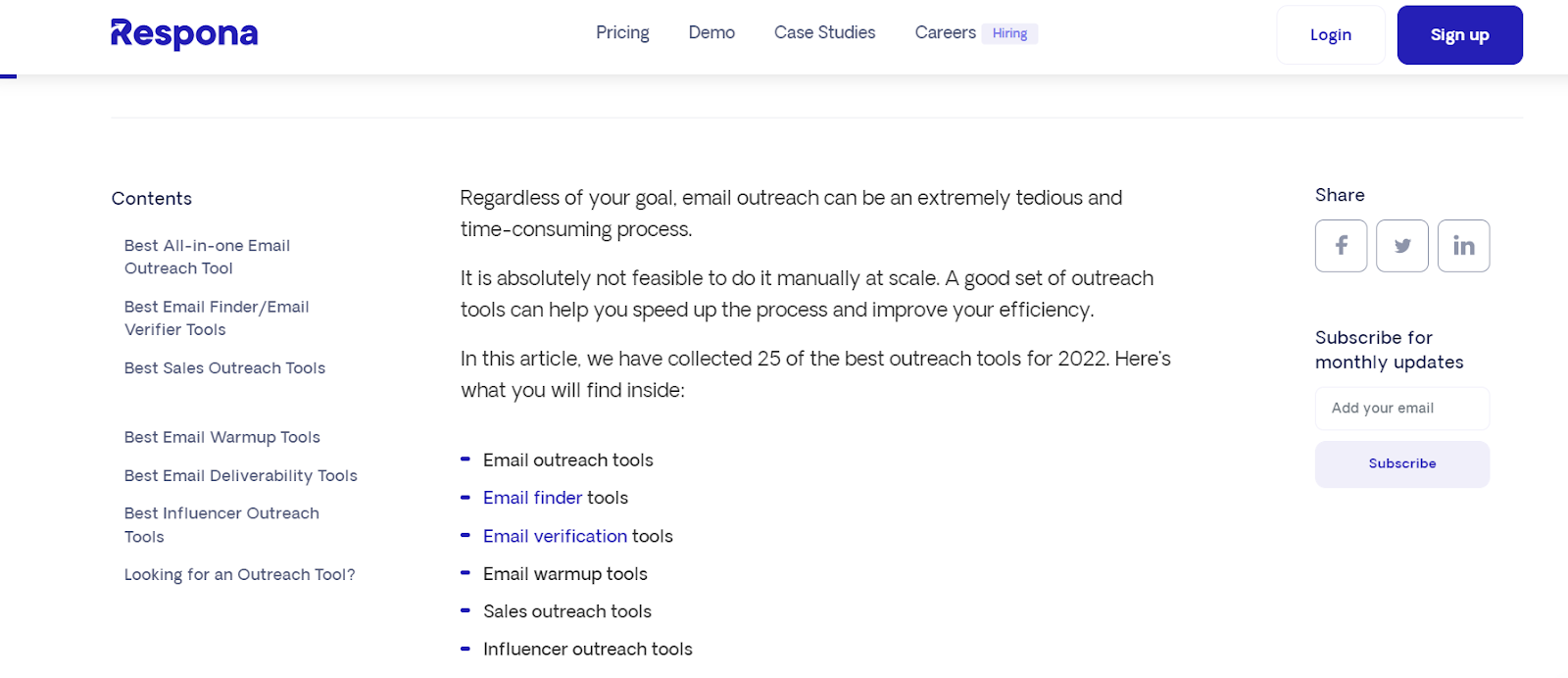
When I publish a new blog post, I do two things:
First, I link out from the new article to other relevant content on my site. If I mention keyword research, I link to my keyword research guide. If I reference technical SEO, I link to that.
Second, and this is the part people forget, I go back into older articles and add internal links pointing to the new piece.
That’s how you push authority toward fresh content.
If your site already has pages ranking in search engine results, those pages carry weight. Passing that through a smart internal link structure helps your new content get discovered and crawled faster.
Step 6: URL Slug and Meta Description
This is where people start overthinking things.
Don’t.
Your URL slug should be clean and simple. Just include the target keyword. No extra fluff. No unnecessary words. If your keyword is “seo copywriting checklist,” your slug can literally be:
/seo-copywriting-checklist
That’s it.
You don’t need full sentences in your URL. Search engines just need clarity.
Now let’s talk about the title tag and meta description.
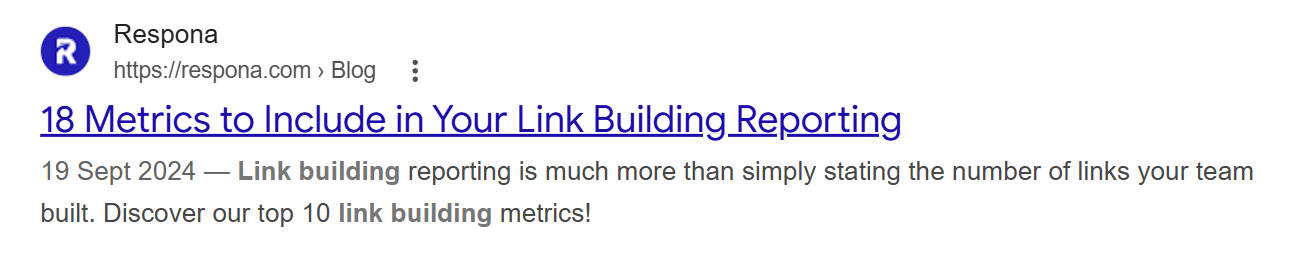
Your title tag should be around 60 characters max. Clear. Direct. Include the primary keyword. This is what shows up in search engine results, so it needs to make someone want to click.
Your meta description should be under 160 characters. It doesn’t directly impact rankings, but it absolutely impacts click-through rate. And better engagement in search results never hurts.
Step 7: Add Alt Text to Images
This step is simple, but most people ignore it.
Alt text is the description you add to an image inside your CMS. It’s not the file name. It’s the text field labeled “Alt Text” or “Alternative Text.”
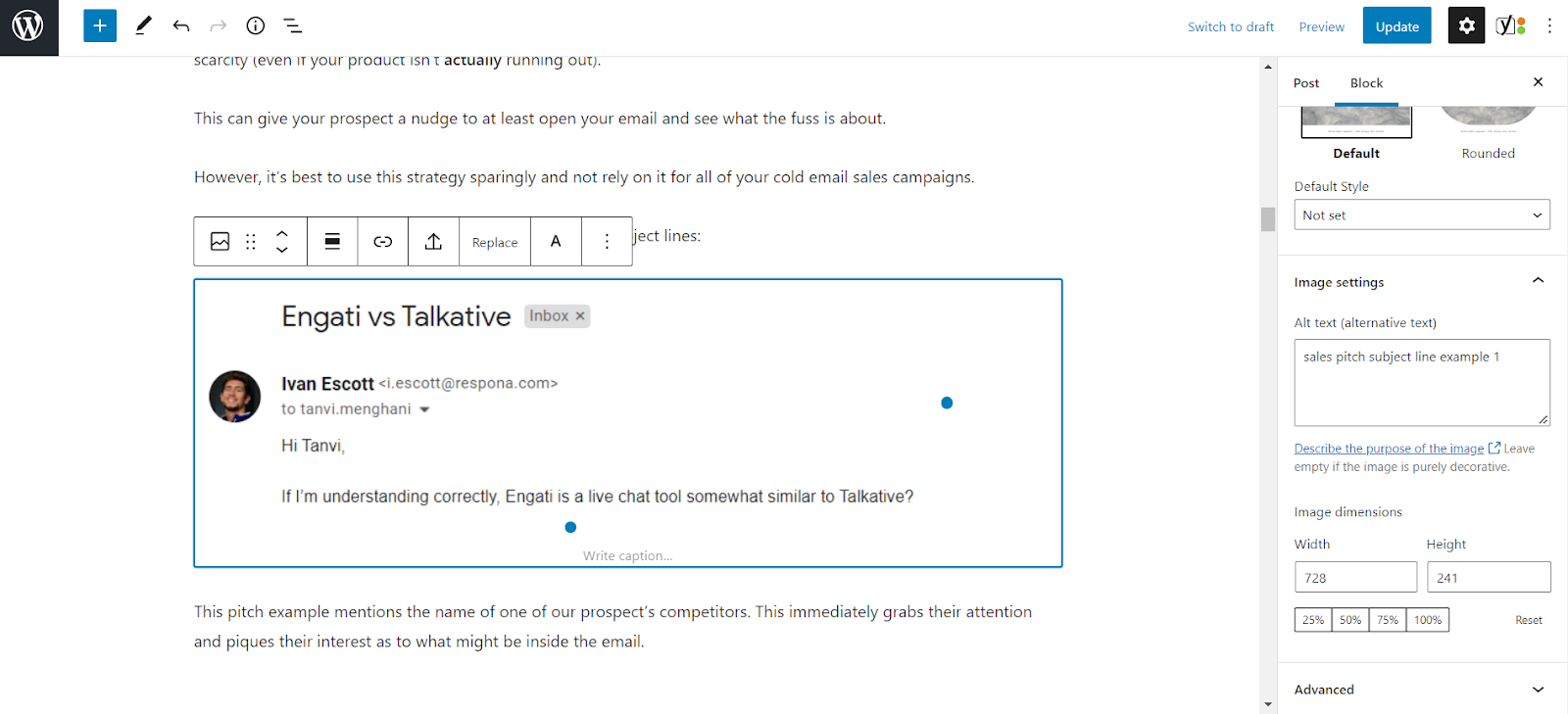
Search engines can’t see images. They rely on that description to understand what the image is about. So if you upload a screenshot showing your SEO copywriting checklist in action, your alt text might look like this:
“SEO copywriting checklist example showing title tag and meta description setup.”
Clear. Direct. Descriptive.
If your primary keyword fits naturally, include it. If it doesn’t, don’t force it. This isn’t about stuffing keywords into every corner of your content.
Step 8: Submit to Google Search Console for Indexing
You’ve done all the work.
Don’t just sit there and hope Google finds it.
Once your blog post is live, go into Google Search Console, paste the URL into the search bar at the top, and request indexing. It takes 30 seconds.

Does Google eventually find it on its own? Usually, yes.
But submitting it speeds things up. Especially if your site is new or doesn’t get crawled frequently.
Search Console will also show you if there are any indexing issues, which makes it one of the most useful tools in your entire SEO checklist.
Link building cheat sheet
Gain access to the 3-step strategy we use to earn over 86 high-quality backlinks each month.
Now Over to You
That’s the whole SEO copywriting checklist.
Nothing revolutionary. No secret hacks. Just a clean system you follow every single time you publish.
Pick the right keyword. Match search intent. Structure your content properly. Optimize without stuffing. Add internal links. Clean up your meta description and title tag. Submit it to Google Search Console.
Do that consistently and your content will rank.
But here’s the part most people ignore.
Even perfectly optimized SEO content struggles without authority. And authority mostly comes from links.
You can write the best piece on the internet, but if no one is referencing it, search engines have no reason to trust it.
That’s where our done-for-you link building comes in.
We secure high-quality placements that strengthen your authority and help your content climb in search engine results faster.
You handle the writing. We’ll handle the links.
Frequently Asked Questions (FAQ)
What is an SEO copywriting checklist?
An SEO copywriting checklist is a structured set of steps you follow to make sure your content is optimized for search engines and users. It covers keyword research, search intent, title tag and meta description optimization, internal linking, and basic technical SEO. It removes guesswork from SEO copywriting.
Is SEO copywriting different from regular copywriting?
Not fundamentally. SEO copywriting is still copywriting at its core, but with added search engine optimization layers. You’re writing for your target audience while also structuring the content so search engines can understand and rank it in search results.
How important is keyword research in SEO copywriting?
It’s step one for a reason. Without proper keyword research, you’re guessing what people search for. Choosing the right primary keyword and target keyword ensures your content aligns with real search demand and has a realistic chance of ranking.
Does keyword density still matter?
Not in the way people think. Keyword density isn’t a primary ranking factor anymore. What matters is covering the topic thoroughly and naturally including relevant keywords that match search intent and user intent.
Do I need Google Search Console for SEO content?
Yes. Google Search Console helps you submit pages for indexing, monitor search engine results performance, and identify issues affecting your rankings. It’s a core tool in any serious SEO checklist.
Can good SEO copy rank without backlinks?
It’s possible for low-competition keywords. But in most competitive niches, even the best SEO writing needs authority behind it. Strong link building supports your SEO strategy and helps your content compete in search engine results.