
Managing social media today isn’t just about posting regularly; it’s about choosing the right social media suites software that keeps everything organized and running smoothly. As a content marketer who works closely with social teams, I’ve seen how quickly things can get overwhelming when you’re juggling planning, scheduling, engagement, and reporting across multiple platforms.
These conversations have given me a deeper appreciation for the backstage effort that goes into maintaining a strong social presence. Many teams start with basic planners, spreadsheets, or platform-specific schedulers, only to realize that as content increases or new channels are added, these setups quickly fall apart. That’s when it becomes clear, a robust social media management suite isn’t a nice-to-have, it’s essential for scaling content, improving collaboration, and maintaining consistency.
What teams want is simple: one place to plan, schedule, publish, engage, and analyze without juggling multiple apps or losing track of conversations. The right platform doesn’t just improve workflows; it reduces repetitive tasks, centralizes collaboration, and gives marketing teams clearer visibility into what’s actually working.
That’s what led me to identify today’s best social media suites. I analyzed thousands of G2 social media suites reviews and evaluated 20+ platforms across scheduling, analytics, social listening, AI-driven optimization, collaboration, and real user experience. In this article, I’m sharing the top platforms that stood out, so whether you’re running social for a small brand, a growing agency, or a multi-location business, you’ll find a tool that supports your workflow and helps your social presence grow with confidence.
8 best social media suites for 2026: My top picks
- Hootsuite: Best for centralized scheduling and social content management
Gives teams a single dashboard to schedule posts, monitor engagement, and manage multiple accounts at scale. (Pricing from $99/month) - Birdeye: Best for unified reputation management and automated review generation
Helps businesses collect reviews, monitor sentiment, and manage customer feedback across platforms. (Pricing available on request) - Sprout Social: Best for teams that need powerful analytics and multi-platform social management
Combines advanced reporting, collaboration tools, and deep insights for data-driven social strategies. (Pricing from $199/user/month, billed annually) - Semrush: Best for data-driven social planning and competitive insights
Offers SEO + social tools to analyze competitors, optimize content, and plan high-performing social campaigns. (Pricing from $139.94/month) - SOCi: Best for multi-location teams that need simple, centralized social posting
Streamlines posting, approvals, and engagement for distributed teams and franchise-style businesses. (Pricing available on request) - Reputation: Best for customer sentiment and review analytics
Aggregates reviews, surveys, and social signals to help brands understand audience sentiment in real time. (Pricing available on request) - Zoho Social: Best for small teams that need simple, affordable multi-platform
Provides easy publishing, monitoring, and reporting with a generous free plan for growing teams. (Free plan available) - Simplified: Best for small teams that need fast AI-powered content creation
Enables quick social content generation with built-in AI writing, visuals, and scheduling tools. (Pricing from $29/month)
*These best social media suites are top-rated in their category, according to the G2’s Fall 2025 Grid Report. I’ve also included their monthly or annual pricing to facilitate easier comparisons for you.
8 best social media suites I recommend
Social media suites bring everything into one streamlined workspace: scheduling, content creation, analytics, engagement, collaboration, and reporting. After speaking with social media managers, creators, and brand teams, it became clear that the right platform isn’t just a convenience; it’s the engine behind consistent, high-performing social content.
It’s no surprise that interest in this category continues to climb. The social media management software market is expected to grow from $36.24 billion in 2025 to $168.64 billion by 2035, reflecting a strong 16.62% CAGR. With brands producing more content than ever and expanding across multiple platforms, social media suites are becoming essential for managing complexity, improving workflows, and identifying what truly connects with audiences.
The best social media suites should simplify planning, supercharge creativity, and make insights accessible, ultimately helping teams stay consistent, reduce manual work, and build stronger relationships with their audiences.
How did I find and evaluate the best social media suites?
I began by reviewing G2 Grid Reports to identify leading platforms in the social media management category. From there, I spent time digging through verified user reviews and speaking with social media managers, content creators, and marketing teams to understand what they rely on most in their day-to-day workflows. I explored real-world use cases across scheduling, publishing, analytics, collaboration, social listening, and engagement to see how each platform performs when teams actually use it.
After gathering insights from professionals with hands-on experience, I validated their feedback by cross-referencing thousands of G2 reviews to understand patterns, strengths, limitations, and common feature requests. The screenshots featured throughout this article are sourced from either the vendor’s G2 profile or publicly available materials to provide an accurate representation of each platform’s interface.
My goal was simple: to determine whether these tools deliver on their promises, understand what each one is genuinely best at, and highlight any free or lower-cost options you can test without commitment.
What I prioritized when evaluating the best social media suites
Choosing the right social media suite can completely reshape how teams plan, publish, and analyze content. With so many moving parts, multiple platforms, constant content demands, and shifting algorithms, I wanted to understand what truly makes a tool stand out.
Here’s what I prioritized and why these criteria matter.
- Scheduling and cross-platform publishing: Scheduling is the heart of every social workflow, and I came across countless comments highlighting how important it is to plan content quickly, adjust posts per channel, and visualize campaigns in one clean calendar. I noticed many users calling out features like drag-and-drop timelines, automated publishing, and suggestions for the best times to post. These small touches make a big difference when teams are trying to stay consistent without jumping between multiple apps.
- Analytics depth and reporting clarity: Strong analytics consistently emerged as a major priority. I saw a lot of praise for suites that offer clear dashboards, audience insights, post-level breakdowns, and reports that are easy to share with stakeholders. Teams want to know what’s working and why, and the platforms that made these insights simple to understand stood out quickly.
- Collaboration and workflow tools: Social media isn’t managed by just one person anymore, and I saw repeated mentions of how helpful it is when teams can share drafts, leave comments, assign approvals, and access shared asset libraries in one place. I noticed that users appreciate tools that keep everyone on the same page, especially agencies and busy marketing teams juggling multiple brands.
- Engagement and inbox management: Staying on top of comments, messages, and mentions across multiple channels can become overwhelming quickly. I saw a lot of feedback about how much easier it is when everything sits in one unified inbox. Social listening, tagging, and sentiment tracking also emerged as must-have features, the kind that help teams keep conversations organized and respond more quickly.
- Ease of use and onboarding experience: Even the most powerful software falls flat if it feels clunky. As I read through reviews, I kept seeing praise for platforms with clean dashboards, simple navigation, and quick onboarding. Many users mentioned how much they value tools that work without requiring endless tutorials or setup time, and tools that felt cluttered or required too many steps didn’t rank as highly.
After reviewing all these factors, I narrowed down my recommendations to the eight social media suites that consistently stood out, the ones that balance publishing power, analytics, collaboration, engagement, and usability in a way modern teams truly benefit from.
The list below contains genuine user reviews from the Social Media Suite Software category on G2. To be included in this category, a solution must:
- Plan and publish digital content via social media
- Engage with communities via social media
- Report on the effectiveness of social media practices
- Track regions and demographics of the audience
- Analyze the performance of posts and campaigns
- Monitor for related mentions and trends
*This data was pulled from G2 in 2025. Some reviews may have been edited for clarity.
1. Hootsuite: Best for centralized scheduling and social content management
What consistently stands out in Hootsuite’s reviews is how dependable its scheduling and planning system feels once you’re inside the platform. Reviewers talk frequently about being able to map out content weeks ahead, see everything laid out visually, and publish across multiple networks without jumping between tabs. That foundation is evident everywhere in the data, too, with Hootsuite meeting requirements at a strong 87%, according to G2, which reflects how well its core publishing workflow addresses the day-to-day needs of social teams.
I noticed that many G2 users highlight how the planner, calendar, and multi-platform posting tools reduce manual work, especially for small businesses and mid-sized teams that don’t have extra personnel to manage each channel separately. For most teams, it doubles as a powerful social media monitoring suite.
Beyond publishing, a large number of reviewers praise Hootsuite for giving them a single place to monitor activity across their social accounts. Features like streams, dashboards, and cross-channel views are frequently requested, especially by users managing multiple profiles simultaneously. Several mentions how intuitive it feels to see messages, comments, and mentions together rather than bouncing across platforms. According to G2, Hootsuite’s ease of use sits at 88%, which aligns with how reviewers describe navigating between scheduling, monitoring, and reporting without friction. Even newer users call out how quickly they were able to adopt the system.
Another theme that surfaced often is the value of its analytics and social listening. Many G2 reviewers say Hootsuite provides the performance insights they need at a glance, whether they’re tracking engagement, identifying audience trends, or reporting back to stakeholders. The comments on social listening are especially consistent: users appreciate the ability to monitor keywords, track brand conversations, and stay up-to-date with relevant industry discussions without needing a separate tool. For teams looking for an all-in-one social media suite, this combination of publishing, monitoring, and insights becomes a major part of why they continue using Hootsuite long-term.
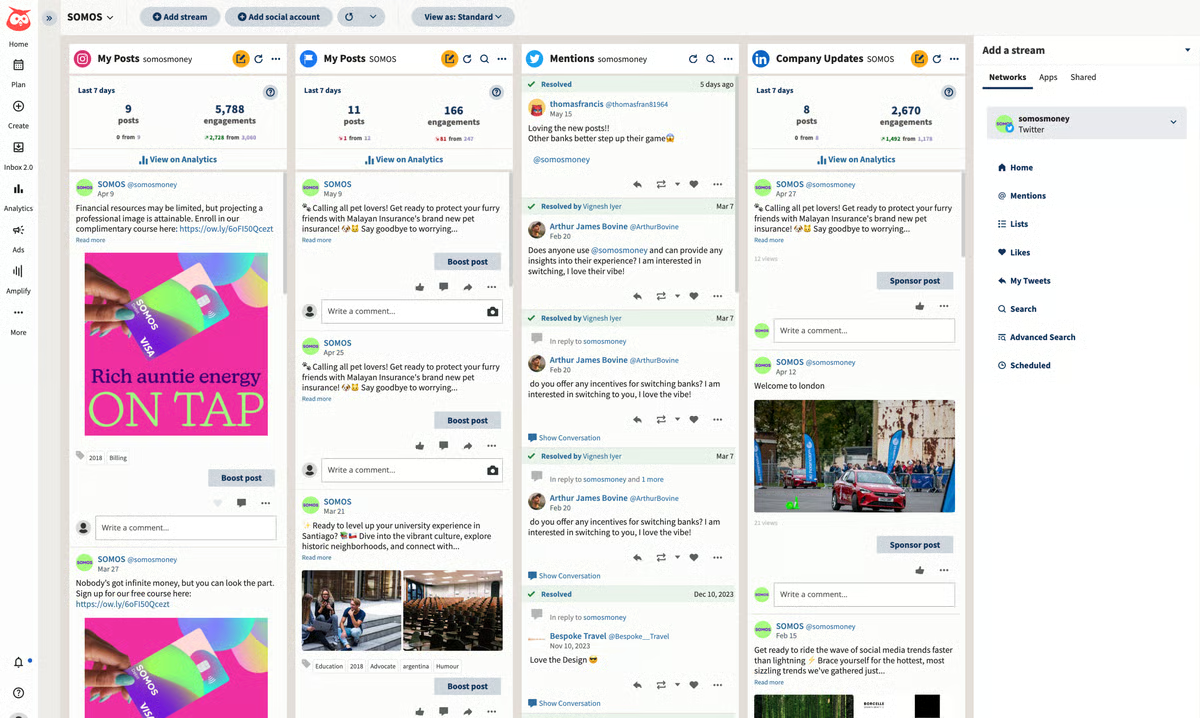
Hootsuite’s collaboration and team-management workflows are another area where reviewers consistently see value. Many G2 users appreciate the ability to assign tasks, coordinate responses, and manage approvals directly within the platform, especially when multiple team members or departments share ownership of different channels. The ability to divide work clearly, whether for responding to comments, drafting posts, or reviewing scheduled content, reduces duplication and keeps teams aligned as campaigns move from planning to publishing.
Hootsuite continues to be praised by G2 reviewers for its robust scheduling, analytics, and social listening capabilities, giving teams a single hub to manage multi-channel campaigns efficiently. That said, several reviewers noted that newer content formats, particularly reels, TikTok posts, and longer videos, can require extra attention when uploading or resizing. These small performance gaps mainly affect teams focused on video-first strategies, while brands working primarily with static posts, carousels, or mixed-media campaigns still find Hootsuite’s workflow reliable and well-optimized.
G2 users also highlight the platform’s strong enterprise features and scalability, making it ideal for organizations that need deeper analytics and collaboration tools. However, some smaller teams mentioned that pricing can feel higher compared to simpler social scheduling platforms, which makes Hootsuite best suited for businesses that can fully leverage its advanced suite of monitoring, automation, and reporting tools rather than those seeking basic posting capabilities.
Still, what comes through clearly across thousands of reviews is that Hootsuite remains a dependable choice for planning, scheduling, and managing multi-channel social workflows. If you’re asking “Which social media suite offers the most complete publishing and analytics features?”, Hootsuite is often the first platform teams consider, thanks to its robust scheduling calendar and comprehensive reporting tools.
What I like about Hootsuite:
- Scheduling and planning tools make it easy to map out content across multiple platforms without juggling separate apps.
- Strong monitoring and analytics features give a clear view of performance and conversations happening across channels.
What G2 users like about Hootsuite:
“When I open it in the morning at The Social Blend, everything just sits there waiting, like the day took a breath before I did. The calendar helps me see the whole week in a single glance, which sounds simple, and maybe it is, but it’s the kind of simple that makes my brain feel less tangled. I can tweak an Instagram caption, jump to a LinkedIn version, adjust a photo, and keep the flow going without losing the original idea. The Listening tab feels like a quiet assistant in the corner catching mentions I’d probably miss while I’m buried in content.”
– Hootsuite review, Isha J.
What I dislike about Hootsuite:
- Hootsuite delivers strong results for teams managing multi-channel campaigns. Based on G2 feedback, some users found that short-form video formats, such as Reels or TikToks, can be less consistent to uploading, which makes them more practical for brands prioritizing static and carousel content over heavy video production.
- Several G2 reviewers also noted that the cost can be high for startups or smaller teams, although larger organizations benefit from the full suite of collaboration, scheduling, and analytics tools included.
What G2 users dislike about Hootsuite:
“The mobile app just doesn’t help me much. I’ve tried using it during client shoots or while traveling, and it always feels clunky. I end up waiting to get back to my laptop because that’s the only place where the workflow feels smooth.”
– Hootsuite review, Divanshi J.
Want to get even more out of your social media suite? Start with a stronger strategy. Explore how a well-structured social media marketing plan sets the foundation for consistent growth.
2. Birdeye: Best for unified reputation management and automated review generation
Birdeye makes it remarkably simple to manage and grow your online reputation from one unified space, and that’s the feature I see mentioned again and again across real user feedback. The platform pulls all your customer feedback into a single hub and automates the process of requesting, collecting, and responding to reviews, which removes much of the manual busywork that teams, especially smaller ones, often struggle with. According to G2 Data, Birdeye meets requirements at an impressive 94%, reflecting how well its review management engine supports everyday needs, such as generating feedback, staying organized, and maintaining visibility across key channels.
Another theme that appeared throughout the dataset is the value users find in Birdeye’s messaging and unified inbox features. Reviewers say having conversations from different channels, social platforms, direct messages, webchat, and even SMS in one place helps them respond faster and stay organized. Several note how this consolidation reduces friction in customer communication and gives better visibility into ongoing interactions. According to G2, Birdeye’s ease of use sits at 94%, and reviewers reinforce that sentiment by calling out how quickly they were able to adopt the inbox and sharing tools without a steep learning curve.
Social posting and listing management are also highlighted as meaningful advantages. Many G2 reviewers mention that Birdeye makes it easy to publish content, track engagement, and maintain consistent business information across directories. Users appreciate not needing multiple systems for posting or maintaining accurate listings, and some describe the platform as a true all-in-one hub for managing both visibility and customer engagement. This breadth of capability is why small businesses, in particular, find it valuable; over half of Birdeye’s customer base, close to 53%, according to G2 Data, comes from smaller teams that benefit from reducing tool fragmentation.
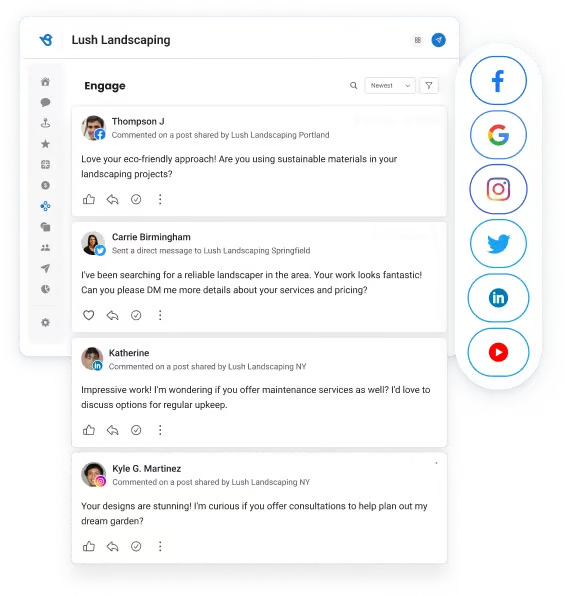
Birdeye is appreciated for helping businesses easily track reviews and customer sentiment across channels. Feedback from G2 highlights that some users want more depth in analytics, such as customizable filters or multi-location reporting. For most small and growing teams, though, the existing dashboards provide all the essential visibility needed to monitor performance without extra complexity.
A handful of G2 reviewers also mention challenges when changing or canceling subscriptions, noting that contracts can feel less flexible. This makes Birdeye a stronger choice for organizations planning to use its full suite long-term, rather than startups needing adaptable billing.
Given the full picture, Birdeye stands out as a strong choice for teams that want a unified, all-in-one platform to manage reviews, streamline communication, and maintain consistent visibility across channels. Many businesses comparing options also explore “What platform integrates social suites with CRM and marketing tools?”, and Birdeye stands out here with its deep connections across listings, messaging, CRM workflows, and feedback systems.
What I like about Birdeye:
- Automated review collection and unified messaging make it easy to stay on top of customer feedback without juggling multiple tools.
- Social posting and listing management help teams maintain visibility and consistency across channels in one place.
What G2 users like about Birdeye:
“I wanted to take a moment to acknowledge the outstanding support we’ve received from our account manager, Arup Das. Arup has been nothing short of exceptional. From day one, he has demonstrated professionalism, deep product knowledge, and a genuine commitment to helping our clinics succeed. He listens carefully, provides tailored solutions, and explains everything with clarity and patience, even the more technical processes.
His guidance has saved us countless hours and has made our Birdeye experience seamless and effective. What stands out most is Arup’s attitude: he is proactive, consistent, reliable, and always willing to go the extra mile. He makes us feel like valued clients, and it’s clear he truly cares about the results we achieve. That level of service is rare, and it reflects incredibly well on your company.
Arup is an absolute asset to Birdeye, and we are extremely grateful to have him as our account manager.”
You are very lucky to have him on your team”.
– Birdeye review, Elizabeth K.
What I dislike about Birdeye:
- Birdeye is praised for simplifying review management and customer engagement on a single platform. Feedback from G2 highlights that some users feel the reporting tools don’t go deep enough for analytics-driven teams, making it better suited for businesses that prioritize easy visibility and communication over complex data analysis.
- Some G2 reviewers also mention that modifying or canceling contracts can take extra steps, which makes Birdeye a stronger fit for organizations planning to use the full platform long-term rather than smaller teams needing short-term flexibility.
What G2 users dislike about Birdeye:
“Issues with different media. When I send pictures or PDF documents, clients are never able to open PDFs, don’t receive the documents or pictures I sent, or have issues downloading what I sent. I need to confirm whether they received everything I sent, including the number to pages and pictures. I usually have to ask for an email to be able to send this information to them.”
– Birdeye review, Mary R.
Looking to streamline your scheduling workflow? Check out our guide to building a social media calendar, including ready-to-use templates to organize your content faster.
3. Sprout Social: Best for teams that need powerful analytics and multi-platform social management
Sprout Social makes it easy to bring all your publishing, engagement, and reporting into one organized workflow, and the feature that reviewers highlight most consistently is its advanced analytics. Many describe Sprout’s reporting as one of the most comprehensive options available in a social media suite. Everything from performance summaries to deeper audience insights feels structured, visual, and actionable. According to G2, Sprout Social meets requirements at 88%, which aligns with how frequently users rely on its analytics to track trends, guide content decisions, or share reports with stakeholders. For marketing teams that need clarity and data they can trust, this analytical depth becomes central to how they work.
Publishing and scheduling come up as another major strength. Users appreciate how simple it is to plan content ahead, customize posts for each platform, and use the calendar to keep upcoming campaigns organized. Many G2 users mention that Sprout helps them coordinate across multiple brands or client accounts without losing track of what’s scheduled where. Combined with built-in collaboration tools, teams rely on Sprout to share drafts, request feedback, and route approvals without switching between apps. With an ease of use rating of 90% on G2, the platform suits teams that want a professional tool without the onboarding friction of more complex systems.
Sprout’s social listening, inbox management, and cross-platform engagement tools also show up repeatedly as core benefits. Reviewers mention how helpful it is to manage comments, messages, and audience interactions in one place, especially across busy or multi-profile accounts. Some users also call out the platform’s audience insights and sentiment indicators, which help them understand what conversations matter most and where engagement is trending. This combination of publishing, engagement, and analytics gives Sprout breadth that many agencies and mid-market teams find essential.
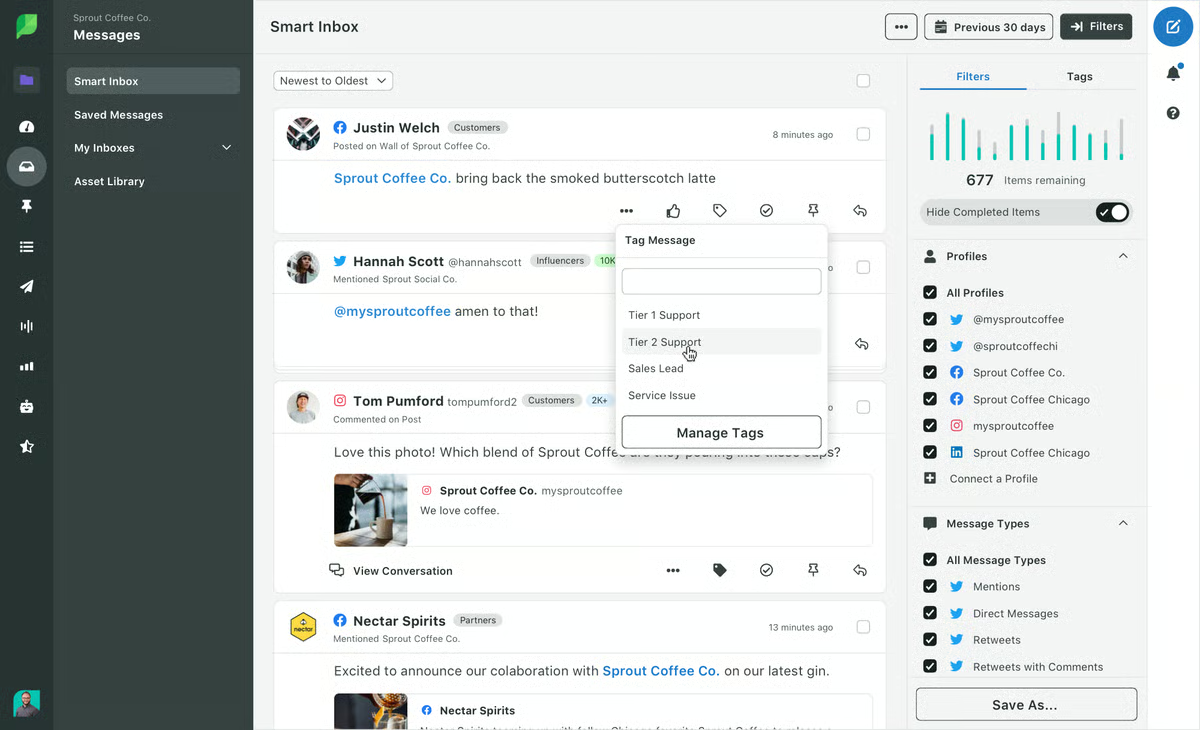
Sprout Social stands out for its intuitive interface, robust analytics, and seamless cross-platform publishing, making it a favorite among marketing teams managing multiple social channels. However, G2 reviewers note that some creative and multimedia capabilities, like TikTok sound selection, still image posting, and detailed comment tagging, can feel limited. These aren’t major drawbacks for most users, but content creators or social media managers who need deep native-platform customization may find it more effective to use Sprout as a central scheduling and analytics hub.
Pricing also comes up in G2 feedback, particularly among smaller businesses. Some teams mention that the cost feels high or that advanced features require early plan upgrades, while mid-market and agency users generally view it as fair, given the strong collaboration, reporting, and listening tools included.
Sprout Social remains one of the most widely trusted tools for businesses that need professional-grade analytics paired with reliable publishing and seamless engagement tools. Teams that often ask “Which vendor offers analytics on cross-channel social performance?” gravitate toward Sprout Social because of its advanced reporting and unified performance dashboards.
What I like about Sprout Social:
- The analytics and reporting tools are detailed, intuitive, and give teams a clear picture of what’s working across every channel.
- Scheduling and collaboration features make it easy to plan content, coordinate with teammates, and keep campaigns organized.
What G2 users like about Sprout Social:
“Integrating the chat feature with users through the fan page is really convenient. This helps me easily interact and support customers right on the platform they frequently use. I use it almost every day. It is very effective in supporting users. Easy to use, it doesn’t take too much time to get familiar with.”
– Sprout Social review, Duy B.
What I dislike about Sprout Social:
- Sprout Social is recognized for simplifying social scheduling and engagement management. According to G2 reviews, some users felt creative tools like TikTok posting and comment tagging could be more advanced, making the platform a stronger fit for teams that separate creative production from scheduling.
- A number of G2 reviewers also point out that pricing may stretch smaller budgets, suggesting Sprout works best for agencies and mid-market teams that rely on deep analytics and multi-profile management.
What G2 users dislike about Sprout Social:
“If I had to pick something, I’d say the learning curve is slightly more detailed than expected, not difficult, just deeper. But honestly, that’s only because Sprout has more features than the average user expects at first.”
– Sprout Social review, Duy B.
4. Semrush: Best for data-driven social planning and competitive insights
Semrush stands out for how seamlessly it brings research, competitive intelligence, and content planning into a single workflow. Across the reviews, the feature that surfaces most consistently is its ability to combine keyword insights, topic research, and social performance data so teams can plan content based on what audiences are actually searching for and engaging with. Users describe Semrush as a place where they can map out a strategy, identify competitive gaps, and validate messaging before even drafting a post. According to G2, Semrush meets requirements at 90%, which reflects how reliably these research and planning tools support teams that want to build social content from real market signals rather than guesswork.
Many reviewers also highlight the value of Semrush’s broader ecosystem in creating content for social channels. Because SEO, keyword research, and social publishing live together, users say they can align campaigns more easily, refine messaging, and ensure the topics they’re promoting on social are backed by measurable demand. This ability to connect organic search trends with social planning is what makes Semrush especially popular with small businesses and mid-market teams. 66% of Semrush users on G2 fall into the small business category, and they often note that the platform consolidates multiple tools they’d otherwise have to subscribe to separately.
Another core theme is visibility into competitors. Reviewers frequently mention how Semrush helps them understand what competitors are ranking for, which audiences they’re capturing, and how they position themselves. These insights allow teams to adjust strategy, refine content angles, and uncover topics they may have overlooked. Several users describe this as one of the most actionable aspects of the platform, especially when paired with Semrush’s dashboards and social analytics. G2 shows an ease-of-use score of 86%, and users reinforce that while the tool is powerful, its dashboards make it straightforward to analyze competitive trends at a glance.

Semrush stands out for its comprehensive SEO, keyword tracking, and competitive intelligence capabilities. It’s a go-to for marketers who want deep visibility into performance and market trends. That said, some G2 reviewers who rely heavily on precision analytics note that certain metrics can vary slightly compared to internal dashboards or other tools. This makes Semrush especially effective for directional insights, content strategy, and campaign planning, while teams needing highly granular, audit-level accuracy may prefer pairing it with additional validation tools.
Pricing also appears as a recurring theme in G2 feedback. Many users point out that the platform becomes expensive once advanced features or higher limits are required, particularly for small businesses using only part of its toolkit. As a result, Semrush is best suited for mid-sized and enterprise marketing teams that fully leverage its complete suite, from SEO and keyword research to auditing, content optimization, and social monitoring, rather than those seeking a lightweight or single-function SEO solution.
Still, the overall sentiment suggests that Semrush delivers exceptional value for teams seeking depth, context, and competitive intelligence behind every social post. If you’re evaluating tools based on “Which vendor provides AI-powered content scheduling?”, Semrush’s AI-powered features for optimization and content timing make it a compelling option for data-driven teams.
What I like about Semrush:
- The combination of keyword research, topic insights, and social planning makes it easy to build content strategies backed by real data.
- Competitive intelligence tools help teams understand market gaps and refine messaging across campaigns.
What G2 users like about Semrush:
“I’ve been using SEMrush pretty heavily in my SEO work, and what keeps me coming back is how practical the data is. The Keyword Magic Tool is one of my favorite features and the best way I’ve found to uncover long-tail keywords and build out topic clusters quickly. It’s definitely more flexible than what I usually get from Ahrefs. I’ve also been testing their AI tools, and they actually help me understand how my brand shows up across different AIs, not just the regular SERPs. It’s not a perfect platform, but it saves me time and helps me spot opportunities I’d probably miss otherwise.”
– Semrush review, Karyna B.
What I dislike about Semrush:
- Marketers appreciate Semrush for its comprehensive and intuitive features. Based on G2 feedback, some teams found that specific data points, like keyword metrics or site traffic, can occasionally be inconsistent, which makes it a stronger choice for guiding strategy than for absolute precision analytics.
- Pricing also comes up frequently in G2 reviews, with users saying it’s better aligned with teams that use the full range of SEO, PPC, and content tools rather than those seeking a lightweight or budget-friendly solution.
What G2 users dislike about Semrush:
“I find the pricing of Semrush to be quite high, especially for freelancers or small teams who might not need all the advanced features. Additionally, the vast amount of data and tools can be overwhelming for beginners. It would be more user-friendly if there were simplified tutorials or guided workflows to help new users navigate through the platform more efficiently.”
– Semrush review, Ayussh S.
5. SOCi: Best for multi-location teams that need simple, centralized social posting
SOCi makes it easy to manage social content across multiple platforms, and the feature users mention most consistently is how simple it is to schedule and distribute posts from one place. Teams like having a single dashboard where they can plan content, publish across multiple channels, and keep everything organized without having to manage each platform separately. According to G2, SOCi meets requirements at 90%, which aligns with how reliably its scheduling and posting tools support users who need an efficient, centralized workflow, especially small businesses and multi-location teams juggling large volumes of content.
Another strong theme in the reviews is ease of use. Many users describe SOCi as straightforward, intuitive, and easy to adopt, even for teammates who don’t regularly use social tools. The layout, calendar, and navigation are often highlighted as easy to learn, and several reviewers appreciate how the tool saves time for smaller teams who may not have dedicated social managers. With an ease-of-use score of 89% on G2, SOCi consistently supports users who want a functional platform without a steep learning curve.
Reviewers also praise the platform for its help in staying organized and providing a clear view of an entire month or campaign at a glance. Users working in multi-location environments appreciate being able to manage content across branches or stores in a unified interface. Some mention SOCi’s content recommendations and prebuilt posts as useful for keeping feeds active without requiring constant hands-on creation, which is especially valuable for busy local teams.
SOCi stands out for helping multi-location businesses and franchises manage consistent, on-brand social presence across platforms. That said, some G2 reviewers note that the interface can initially feel somewhat complex, particularly for beginners or teams managing multiple profiles simultaneously. Tasks such as editing platform-specific posts or navigating multi-section dashboards can require extra time to learn, making SOCi a better fit for teams focused on streamlined scheduling and brand consistency rather than highly customized, creative workflows.
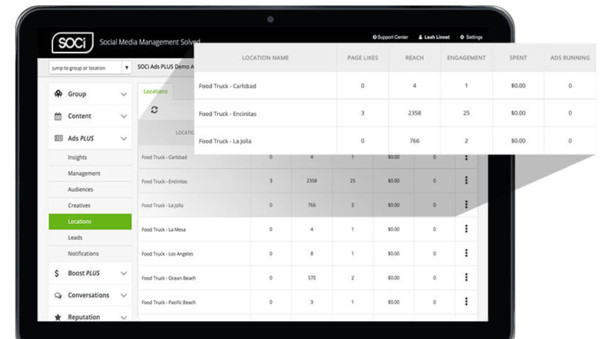
Reporting is another area where G2 users see room for growth. Several reviewers note that analytics could be more in-depth, particularly for multi-location performance tracking or granular segmentation, though most agree that it effectively covers core metrics. For marketing teams seeking clear, top-level visibility, SOCi performs well, while data-heavy teams or agencies may prefer pairing it with a more advanced analytics tool for detailed insights.
SOCi remains a strong option for small businesses and multi-location teams that want a reliable, easy-to-use platform to manage social posts at scale. For organizations wondering “Which solution supports multi-language content publishing?”, SOCi offers structured workflows that support localization and content consistency across regions.
What I like about SOCi:
- Scheduling and posting tools make it easy to manage content across multiple platforms without juggling separate apps.
- The interface is simple and saves time for small teams or multi-location businesses that need a consistent posting workflow.
What G2 users like about SOCi:
“I’ve been a SOCi customer for over three years in the multifamily industry, and I can confidently say that no other platform comes close. I’m constantly vetting other solutions, and none compare to SOCi’s combination of robust features, seamless integrations, and continuous innovation.
The level of support SOCi provides is unmatched, prompt, thorough, and genuinely invested in our success. My rep, Ben, along with the entire multifamily team, is incredibly hands-on, knowledgeable, and transparent. Their dedication and proactive communication make you feel like more than a client; you feel like a true partner.
SOCi isn’t just a platform; it’s a partnership that elevates our marketing operations and helps us deliver better experiences for our communities every day.”
– SOCi review, Kelsey S.
What I dislike about SOCi:
- SOCi helps teams maintain consistent communication across multiple channels. According to G2 reviews, certain areas of the interface can feel confusing for new users or teams managing many profiles, making it a better fit for those seeking efficiency and ease of scheduling over advanced creative control.
- G2 reviewers also point out that analytics could be more robust, meaning SOCi is best for businesses that value simplicity and quick insights over extensive data breakdowns.
What G2 users dislike about SOCi:
“There are a few areas where the platform could improve. Some features can feel a bit limited or unintuitive depending on the use case. However, the SOCI team has been receptive to feedback and continues to work on enhancements, which gives us confidence in the platform’s long-term value.”
– SOCi review, JuWan R.
6. Reputation: Best for customer sentiment and review analytics
Reputation brings all of your customer feedback, reviews, social activity, and messaging into one place, and the feature users call out most consistently is its ability to centralize everything into a single dashboard. Many reviewers mention how helpful it is to see reviews, surveys, ratings, and social posts together rather than jumping between tools, especially when overseeing multiple locations or large customer bases. According to G2, Reputation meets requirements at 92%, a reflection of how well this unified view supports teams that rely heavily on monitoring customer sentiment and managing their online presence at scale.
Another strong theme across the dataset is Reputation’s reporting and daily insights. Users appreciate the clear summaries, automated email digests, and visibility into trends across locations, platforms, and customer touchpoints. Several mention that these insights help them quickly understand performance without needing to run manual reports. With a 91% ease-of-use score on G2, Reputation provides teams with a structured way to track customer feedback and take action before issues escalate.
Many reviewers also highlight the platform’s messaging, scheduling, and posting tools. They find it easy to publish across channels, monitor customer conversations, and respond to feedback in real-time. For teams handling high volumes of customer interactions, having social, reviews, and messaging in a single workflow makes daily operations noticeably smoother. Reviewers also call out the convenience of the mobile app, which allows them to respond and monitor activity on the go, an advantage for multi-location managers who constantly move between sites.
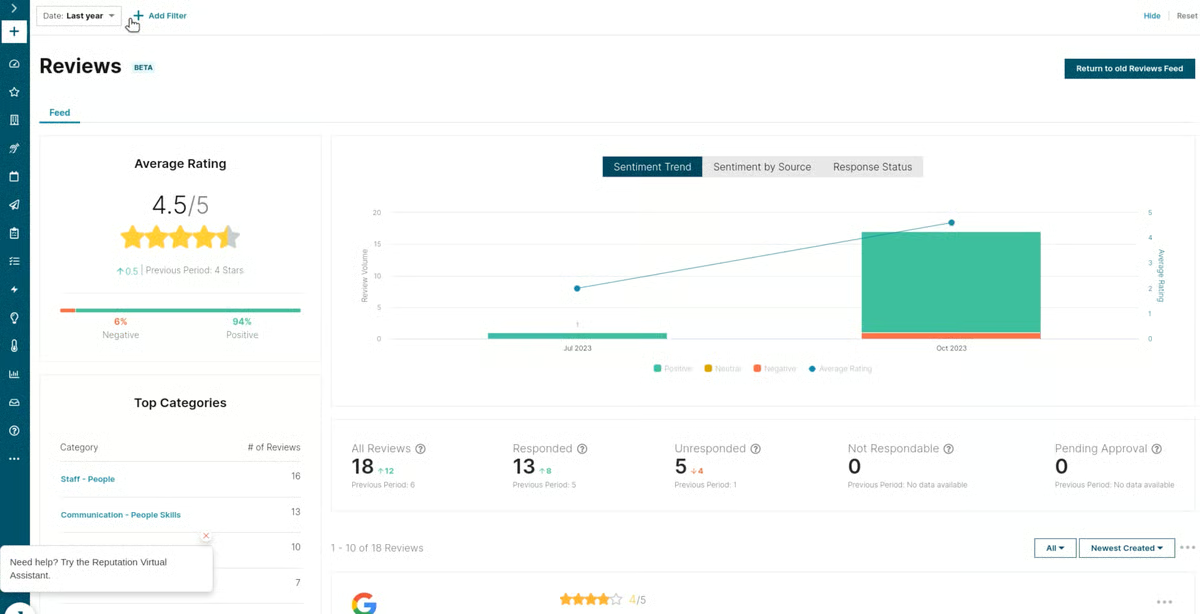
Reputation is widely recognized for giving businesses a unified view of customer feedback, reviews, and engagement across multiple platforms. That said, some G2 users report slow loading times or brief delays when switching between sections or syncing new reviews, particularly for teams managing large data volumes or multiple linked profiles. This makes Reputation a better fit for organizations that prioritize consolidated visibility and analytics over instant real-time updates.
Another theme from G2 feedback is the desire for more customization in templates and content formatting. Some reviewers note that certain fields have strict character or formatting limits, which can restrict creative flexibility. For most operational teams, the structured workflow is efficient and reliable, but creative or brand-heavy teams may prefer supplementing Reputation with external tools for advanced content editing.
All in all, Reputation is best suited for brands that need enterprise-level monitoring and sentiment tracking. Brands comparing enterprise solutions frequently ask, “What is the top-rated social media suite for enterprises?”, and Reputation is often shortlisted due to its strong review analytics and cross-location monitoring.
What I like about Reputation:
- The central dashboard makes it easy to monitor reviews, surveys, social posts, and customer conversations in one place.
- Daily reports and clear insights help users stay ahead of trends without running manual analytics.
What G2 users like about Reputation:
“It’s convenient to manage and reply to all reviews from a single location, and it also makes preparing social media posts for various platforms much easier.”
– Reputation review, Molly B.
What I dislike about Reputation:
- Reputation delivers strong multi-location management and review tracking. G2 user feedback noted occasional delays in page loading or data updates, particularly for accounts with large data sets, making it ideal for organizations seeking consolidated reporting rather than real-time responsiveness.
- A few G2 users would like more control over formatting and creative templates, meaning Reputation works best for operational or service-focused teams rather than marketing teams that rely on advanced design flexibility.
What G2 users dislike about Reputation:
“I dislike the issue with survey emails when they bounce due to incorrect email addresses. It’s challenging that I’m unable to resend the survey after correcting the email, which complicates my ability to ensure all feedback is captured effectively.”
– Reputation review, Brandon R.
7. Zoho Social: Best for small teams that need simple, affordable multi-platform scheduling
Zoho Social stands out for how easy it makes day-to-day scheduling and publishing across multiple social channels. Reviewers consistently mention that the interface is clean, intuitive, and designed in a way that makes planning posts feel straightforward, even for users without a formal background in social media management. Many say they appreciate being able to see everything in one place, from drafting posts to scheduling them and checking the best times to publish. According to G2 Data, Zoho Social has an ease-of-use score of 93% and an ease-of-setup score of 94%, which aligns closely with how frequently reviewers emphasize its simplicity and smooth onboarding experience.
Another strong theme in the dataset is how well Zoho Social supports small businesses that need a single tool for managing multiple accounts. Reviewers talk about the convenience of having a unified dashboard, quick access to each platform, and the ability to collaborate easily within small teams. Since 88% of Zoho Social users on G2 come from small businesses, it’s clear that the tool resonates most with teams looking for accessible publishing tools without complex overhead. Many also appreciate helpful touches, such as recommended posting times, automated publishing, and lightweight content organization tools that keep their workflow efficient.
Several reviewers also emphasize Zoho Social’s broader ecosystem and its seamless integration into the larger Zoho suite. Users already on Zoho CRM or other Zoho apps mention how seamless it feels to connect contacts, track engagement, and keep their social activity aligned with other parts of the business. For small teams running sales and marketing through Zoho, having social content integrated into the same environment makes their workflow more connected and predictable.
Zoho Social is praised for its clean interface and efficient scheduling tools that help small teams manage multiple social accounts with ease. That said, several G2 users mention limited support for newer or emerging platforms like Threads and Mastodon, along with occasional restrictions around tagging or multi-page posting, which makes it better suited for small businesses managing standard social channels rather than teams relying on advanced cross-platform or niche integrations.
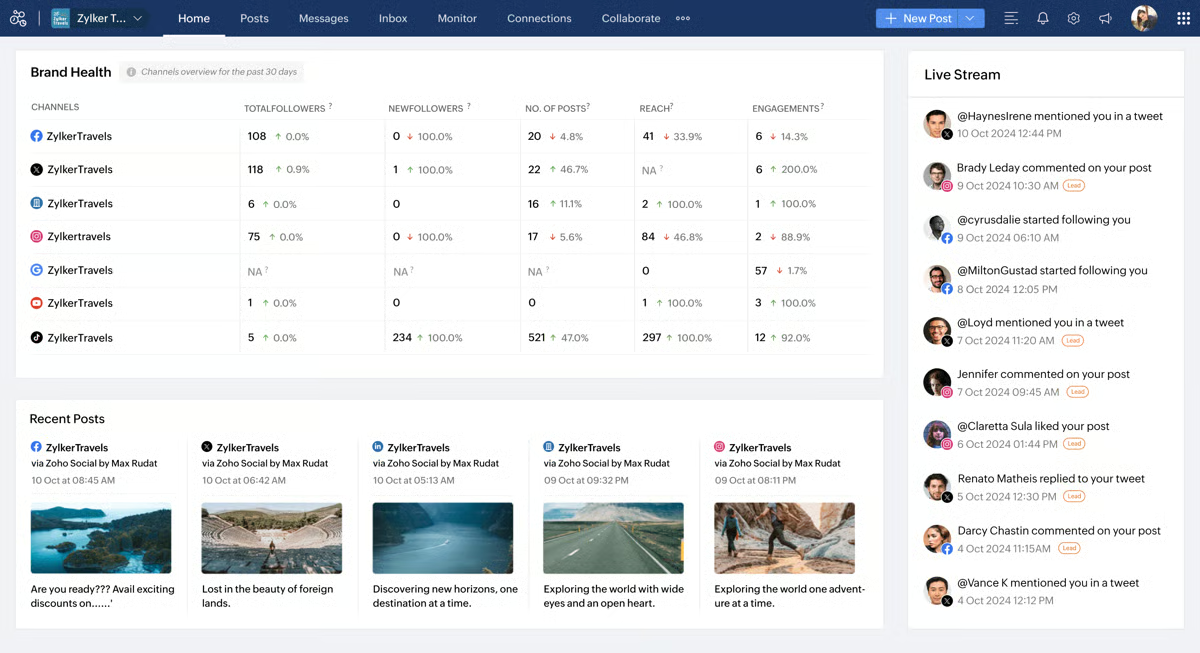
Another theme from G2 feedback is the desire for more in-depth analytics and reporting flexibility. While the current dashboards effectively track engagement and reach, users needing deeper, multi-brand, or layered insights often turn to supplemental tools, making Zoho Social strongest for teams focused on everyday scheduling and streamlined publishing rather than heavy data analysis.
When you weigh it all up, Zoho Social offers an impressive mix of affordability and ease of use, making it a natural fit for SMBs that want reliable social management without the complexity of enterprise tools. Teams trying to stay budget-friendly often search for “What is the most affordable social suite for SMBs?”, and Zoho Social consistently appears as one of the top choices thanks to its free plan.
What I like about Zoho Social:
- The clean interface and simple scheduling tools make posting across platforms easy and fast for small teams.
- Integration with the larger Zoho ecosystem creates a smooth workflow for users already managing sales or marketing in Zoho.
What G2 users like about Zoho Social:
“The ability to clone brand-specific settings, including posting schedules, approval workflows, and visual presets, has saved us an incredible amount of time. Instead of building each brand from scratch, we can simply duplicate a ‘template brand’ and then make any necessary tweaks. The built-in team comments and version history features have also been invaluable, allowing creative leads to flag scheduled posts with notes like ‘needs tone shift’ before they go live. This has helped us prevent several brand consistency mistakes. As an agency managing multiple brands, we find the price-to-feature ratio particularly attractive—we never felt pressured to upgrade to the highest pricing tier just to get the essential features we rely on.
Review collected by and hosted on.”
– Zoho Social review, Avyan S.
What I dislike about Zoho Social:
- Users appreciate Zoho Social’s ease of use and reliable scheduling tools. Based on G2 feedback, some teams found that newer platforms and certain platform-specific features aren’t fully supported yet, meaning it’s a better choice for small businesses with standard channel needs over those relying on emerging networks.
- Several G2 reviewers also mention that analytics could go deeper, which makes Zoho Social best suited for organizations focused on daily publishing rather than data-heavy reporting.
What G2 users dislike about Zoho Social:
“What I dislike about Zoho Social is that while it handles the basics very well, some of the more advanced features feel limited. The analytics could be deeper and more customizable, post previews are not always fully accurate across all platforms, and managing a large number of brands or high posting volumes can sometimes feel a bit cluttered.”
– Zoho Social review, Moinak R.
8. Simplified: Best for small teams that need fast AI-powered content creation
Simplified shines as an all-in-one workspace for creating social content, and the feature reviewers consistently highlight is how seamlessly it brings AI writing, design, and video tools together in one place. Users talk about being able to generate captions, design graphics, create short videos, and polish copy without switching tabs or juggling separate apps. According to G2, Simplified has an ease-of-use score of 91%, which aligns with how often reviewers describe the platform as quick to learn and efficient for day-to-day content creation.
Another theme that appears throughout the dataset is how much time the platform saves for small businesses and individual creators. With 95% of its G2 user base coming from small teams, many say the AI tools help them draft ideas, refine language, or build visuals significantly faster than before. Several reviewers also mention how helpful the templates, prebuilt layouts, and smart automation are when they need to produce content at volume or keep multiple social channels active without relying on a designer or editor.
Simplified’s ability to merge AI workflows with creative editing is also a recurring strength. G2 reviewers call out the convenience of moving from an AI-generated script to a video with subtitles, or from an AI-written caption directly into a post-ready graphic. For solo creators or small teams handling both creative and publishing tasks, this connected workflow is a major advantage. Combined with supportive onboarding and responsive customer support, each scoring above 90% in ease of admin and ease of doing business with, according to G2, it fits teams that want structure without complexity.
It is also appreciated for bringing multiple creative tools, such as writing, design, and video editing, into one intuitive platform. Some G2 reviewers mention that advanced editing features, especially in video or complex design projects, can feel slower when handling large or layered files, making it best suited for teams focused on fast-turnaround social content rather than intensive, high-resolution production.

Feedback from G2 also highlights that certain AI-powered actions, like exports, downloads, or advanced features, rely on credits that can run out quickly. For creators producing content at scale, this can require careful tracking, but for small teams or marketers creating moderate, consistent output, Simplified remains a strong all-in-one creative companion.
All things considered, Simplified is a strong match for small teams and creators who want fast, AI-assisted content creation without having to juggle multiple tools. Creators and small teams looking at options for “Which tool supports approval workflows for social posts?” will appreciate Simplified’s built-in collaboration and review features.
What I like about Simplified:
- The combination of AI writing, design, and video tools makes it easy to build complete social content workflows in one place.
- Templates, quick-generation tools, and simple editing features make it extremely helpful for small teams that need content fast.
What G2 users like about Simplified:
“What I like best is its all in one integration and workflow orchestration. Simplified truly delivers on the promise of combining AI writing, graphics design, and social media scheduling into a single platform. This eliminates the massive friction and “tool fatigue” caused by jumping between separate design tools and a third scheduler. For small marketing teams and freelancers, this is a time and cost-saver.”
– Simplified review, Vishal J.
What I dislike about Simplified:
- Simplified stands out for combining multiple creative functions in one easy-to-use workspace. Based on G2 feedback, some users found that advanced editing tools may lag with large files, meaning it’s better suited for fast social content creation than heavy production tasks.
- Several G2 users also mentioned that credit-based usage for exports and AI features can feel limiting at scale, making it ideal for smaller teams producing manageable content volumes.
What G2 users dislike about Simplified:
“The platform sometimes feels a bit sluggish when working with large video or image files. Certain advanced design features, such as more precise layer control or enhanced export customization, could be refined to better align with what traditional design tools offer. Managing teams and setting permissions can also become somewhat complicated when multiple users are collaborating within the same workspace. Despite these issues, they are relatively minor compared to the overall convenience of having AI copywriting, design, and social content scheduling all integrated in one platform.”
– Simplified review, Deneth P.
Frequently asked questions (FAQs) about social media suite software
Have more questions? Find more answers below.
Q1. What is the best social suite for managing multiple brand accounts?
This depends on team size and workflow, but suites like Hootsuite, Sprout Social, and SOCi offer strong multi-account management, approval workflows, and unified dashboards suited for managing many brands at once.
Q2. What is the most affordable social suite for SMBs?
Zoho Social and Simplified are among the most budget-friendly options, with free plans and low-cost tiers designed for small businesses.
Q3. What platform integrates social suites with CRM and marketing tools?
Birdeye, Zoho Social, and Semrush are popular choices for teams that want their social workflows tightly connected to CRM, email, listings, or broader marketing tools.
Q4. Which solution supports multi-language content publishing?
SOCi and Sprout Social offer strong localization workflows for teams managing content across regions or languages.
Q5. What should you look for in a social media management suite if you’re handling multiple platforms and large content volumes?
Look for core features like multi-platform scheduling, unified engagement inboxes, strong analytics, collaboration workflows, and integrations with CRM or marketing tools. The right suite should streamline your workflow, not add extra steps.
Q6. How do I know which social media suites software fits my team?
Match the tool to your team size and workflow.
- SMBs: Zoho Social or Simplified (affordable + easy).
- Agencies & mid-market: Sprout Social or Semrush (analytics + collaboration).
- Multi-location brands: SOCi or Reputation (centralized oversight + localization).
Better workflows, better social results
After exploring more than 20 social media management platforms and reviewing thousands of real user experiences, one thing is clear: there’s no single “best” tool for every team. Every organization has different social media needs, from advanced analytics to simple scheduling or an all-in-one workspace for planning, collaboration, and reporting.
The eight platforms featured in this guide stand out because they solve these everyday challenges, helping teams publish across channels, manage approvals, and stay organized as workloads grow, whether they’re supporting a small business, multiple clients, or distributed teams.
As you narrow down your options, focus on the problems you’re trying to solve. Do you need deeper insights, easier collaboration, faster content creation, a unified inbox, or simply a system that helps your team stay consistent across platforms? Most of these tools offer free plans or trials, making it easy to test them hands-on before committing.
Social media suites are powerful, but influencer marketing needs a different playbook. Explore our top picks for influencer marketing software here.