How frequently do pages ranking in the SERPs get cited in AI Overviews?
We analyzed 1.9M citations last year in an attempt to answer that question.
But, as with everything AI-related, a lot has changed since then.
For instance, as of January 2026, AI Overviews are now powered by Gemini 3 to better answer searchers’ long-tail questions—having previously relied on earlier Gemini models, including 2.5 variants.
Since that last study we’ve also improved our parsing methodology in Ahrefs, so that we can see even more of the citations that appear in AI Overviews.
So, we decided it was time to update our findings to better answer that initial question.
This time around, we analyzed 863K keyword SERPs, and a grand total of 4M AI Overview URLs—over double our last analysis.
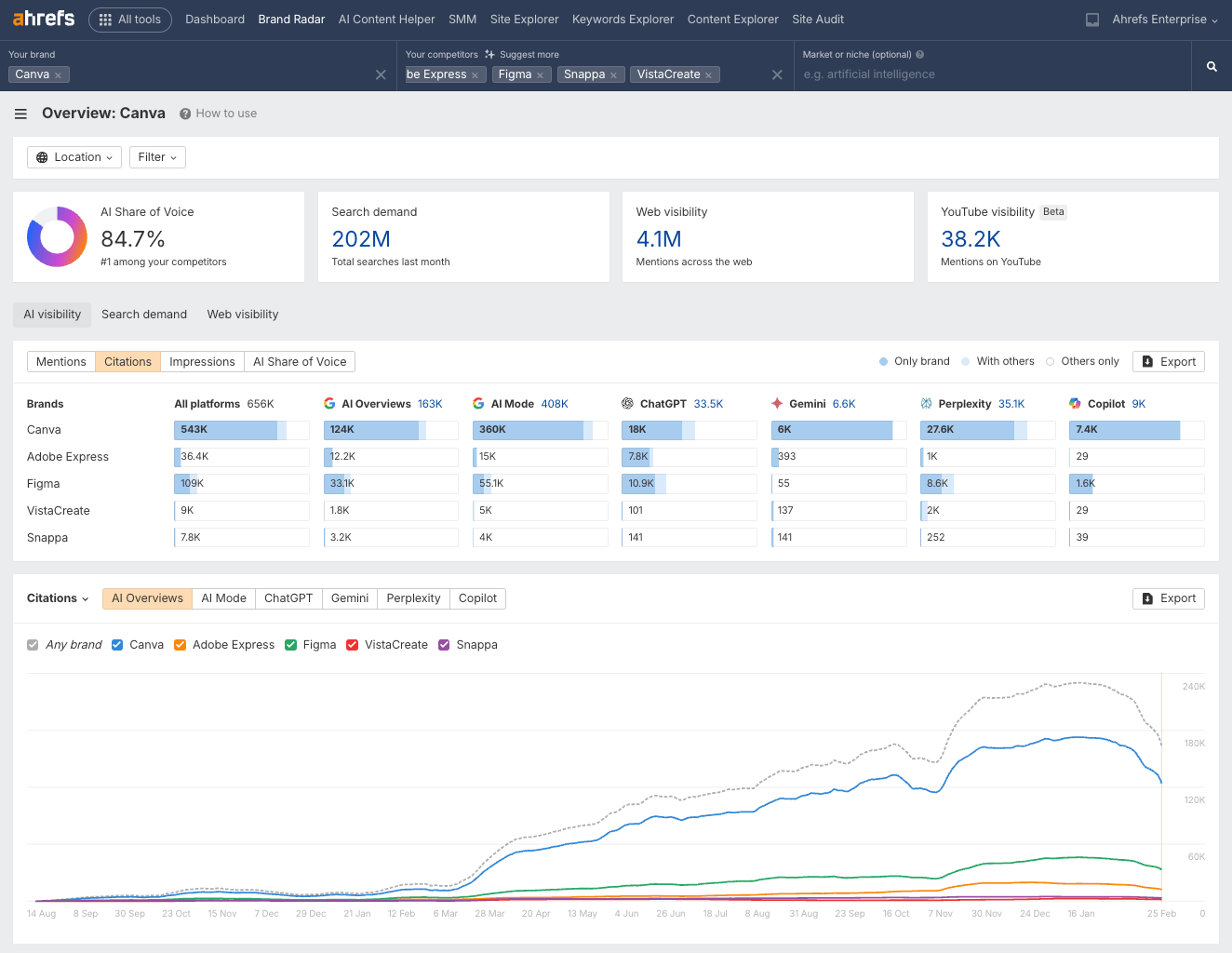
All of this data was taken from Ahrefs Brand Radar, our AI visibility tool.
Here’s what we found…
In our analysis, we looked at cases where the same URL appeared in both the AI Overview and the regular SERP, for the same query.
In our first test, we studied all returning results on the page; including regular blue links and SERP features.
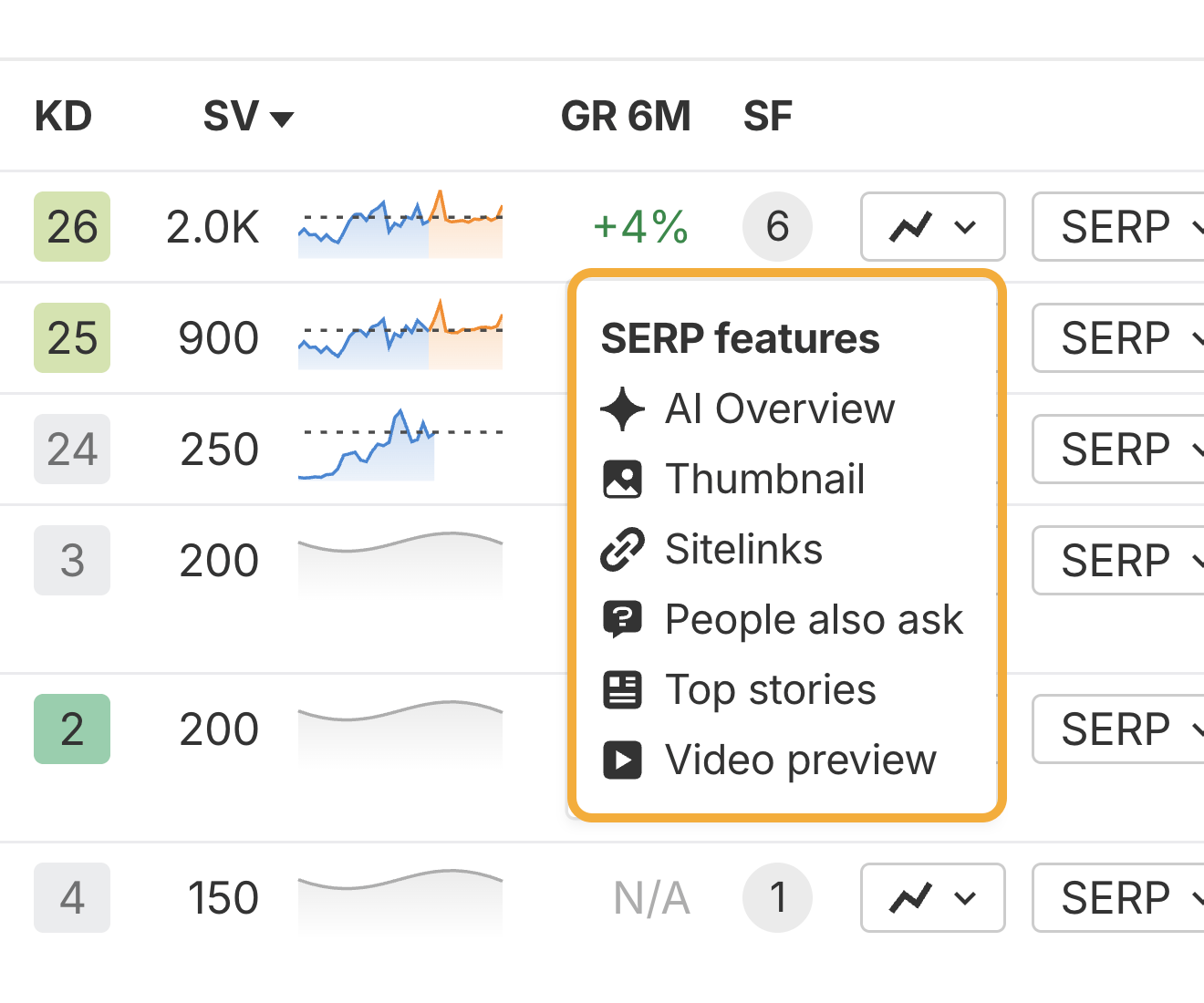
So, for example, we tracked Ads, Featured snippets, PAA boxes, Video Packs and Organic Listings as separate blocks.
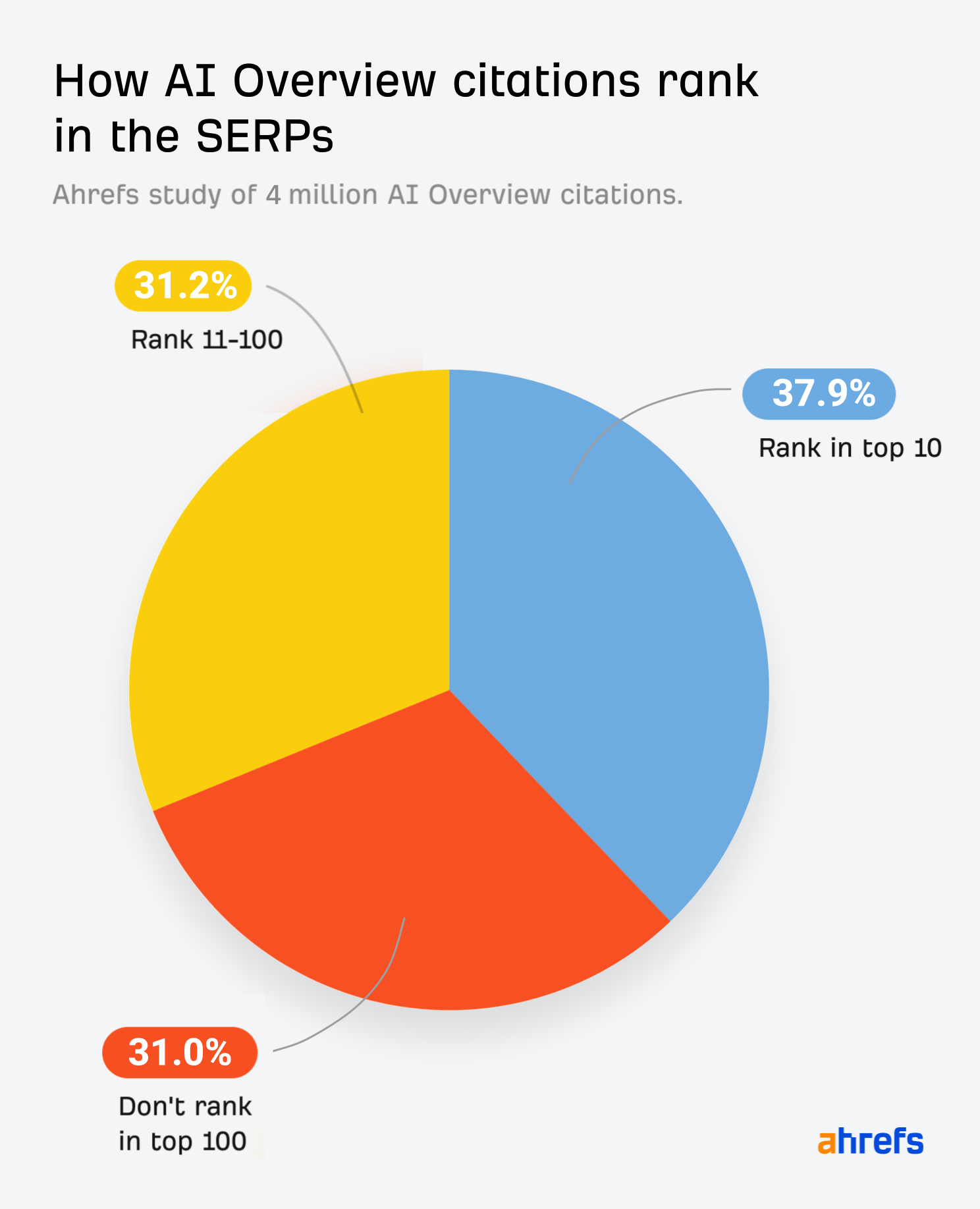
From this, we discovered that 37.9% of URLs cited in AI Overviews also appeared within the first 10 blocks.
The rest were almost evenly split between positions 11–100 (31.2%) and beyond the top 100 blocks (31.0%).
In our second test, we focused on standard blue links only and ignored Ads and other SERP features. The distribution ended up being largely similar:
| Organic position | % of cited URLs |
|---|---|
| Rank in top 10 | 37.10% |
| Rank 11–100 | 26.20% |
| Don’t rank in top 100 | 36.70% |
The only slight difference was that more AI Overview–cited pages fell outside of the top 100.
This indicates that AIOs sometimes cite pages that don’t appear in regular search results, but do appear in SERP Features.
So, what does all of this data actually mean?
Well, at least in comparison to our initial study, it indicates that Google is selecting far fewer pages straight from the original SERP (~76% in July 2025 vs. ~38% today).
To me, that suggests AI Overviews are relying less on the direct search results and more on the sources showing up in fan out query SERPs.
Google has confirmed that its system performs a “Query fan-out” whenever a user searches and AI is triggered.
This is when the initial query is split into multiple related sub-queries.
The pages that appear most often within those sub-query SERPs then get cited in the AI Overview.
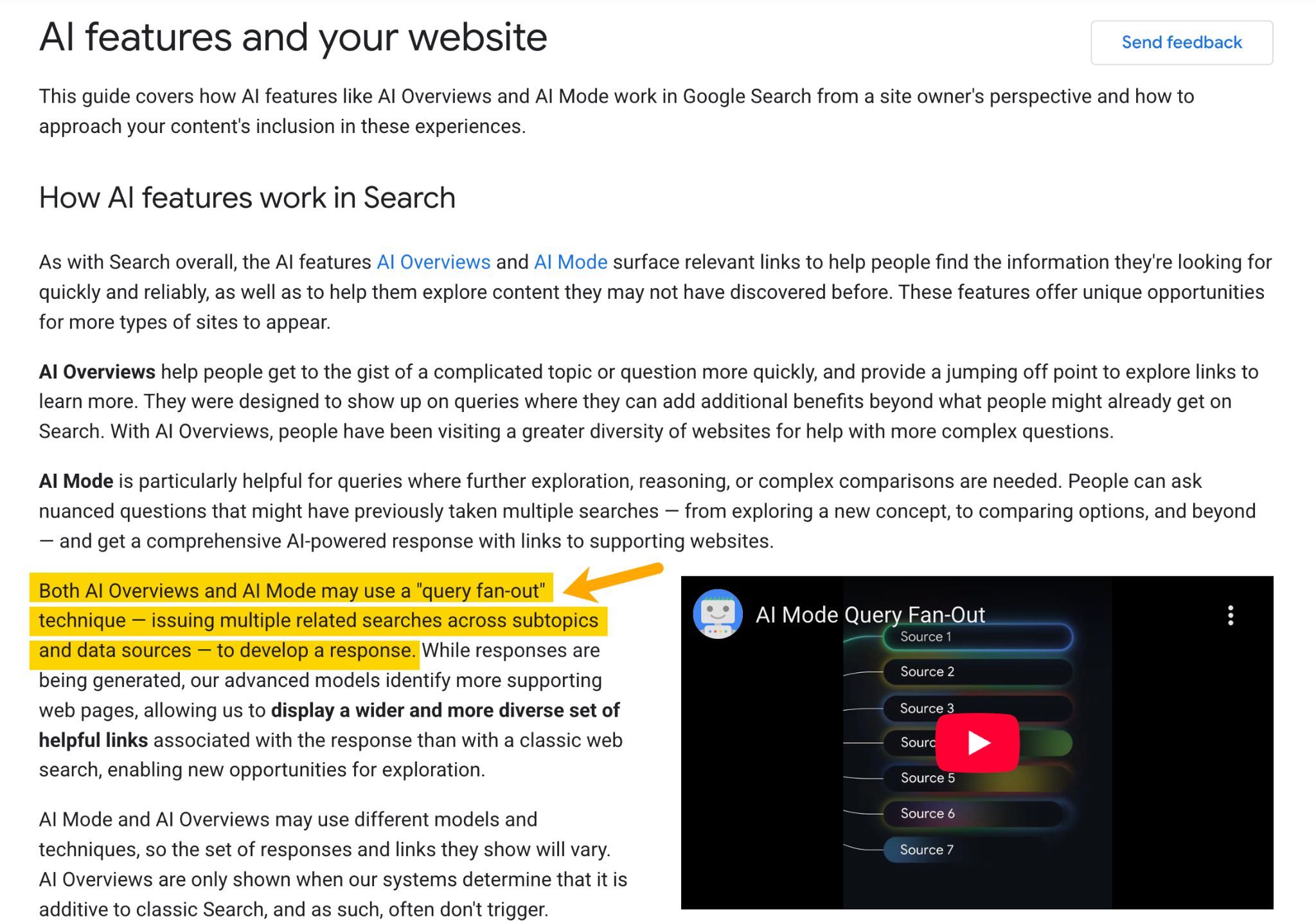
So, with the arrival of Gemini 3, it may be that fan out queries are playing a bigger role in source selection.
It could be expanding queries more aggressively than before, or expanding them more broadly—pulling from related SERPs where fewer pages rank for the original query.
Our research also revealed something pretty interesting about YouTube.
Among the AI Overview cited pages that didn’t rank in Google’s top 100 results for the same keyword, 18.2% were YouTube URLs.
And those YouTube URLs accounted for 5.6% of all AI Overview URLs cited across the dataset.
In other words, YouTube makes up a meaningful slice of total AI Overview citations, despite not ranking in the SERPs for the direct query.
According to data in Ahrefs Brand Radar, YouTube is the most cited domain in AI Overviews today, and has grown 34% over the last six months.
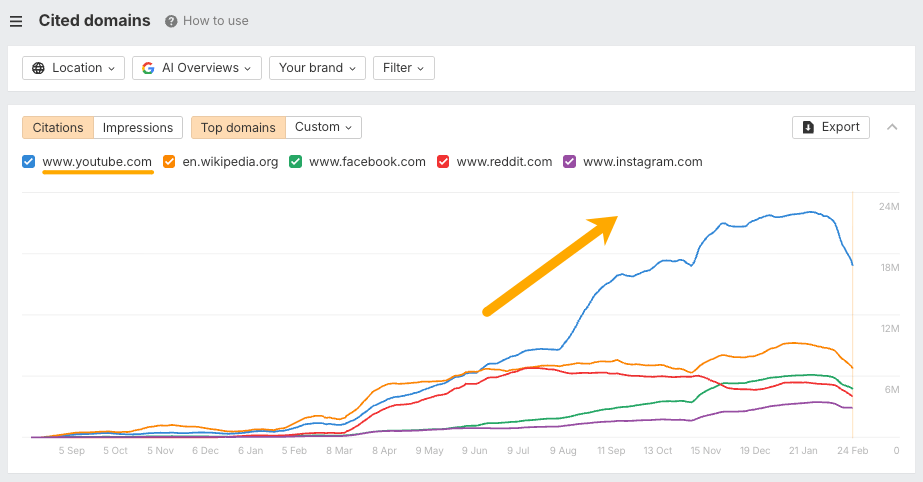
Some of our other studies reinforce the importance of YouTube for AI visibility.
For example, our research of 75K brands revealed that mentions on YouTube—in video titles, transcripts, and descriptions—are the strongest correlating factor with AI Overview visibility.
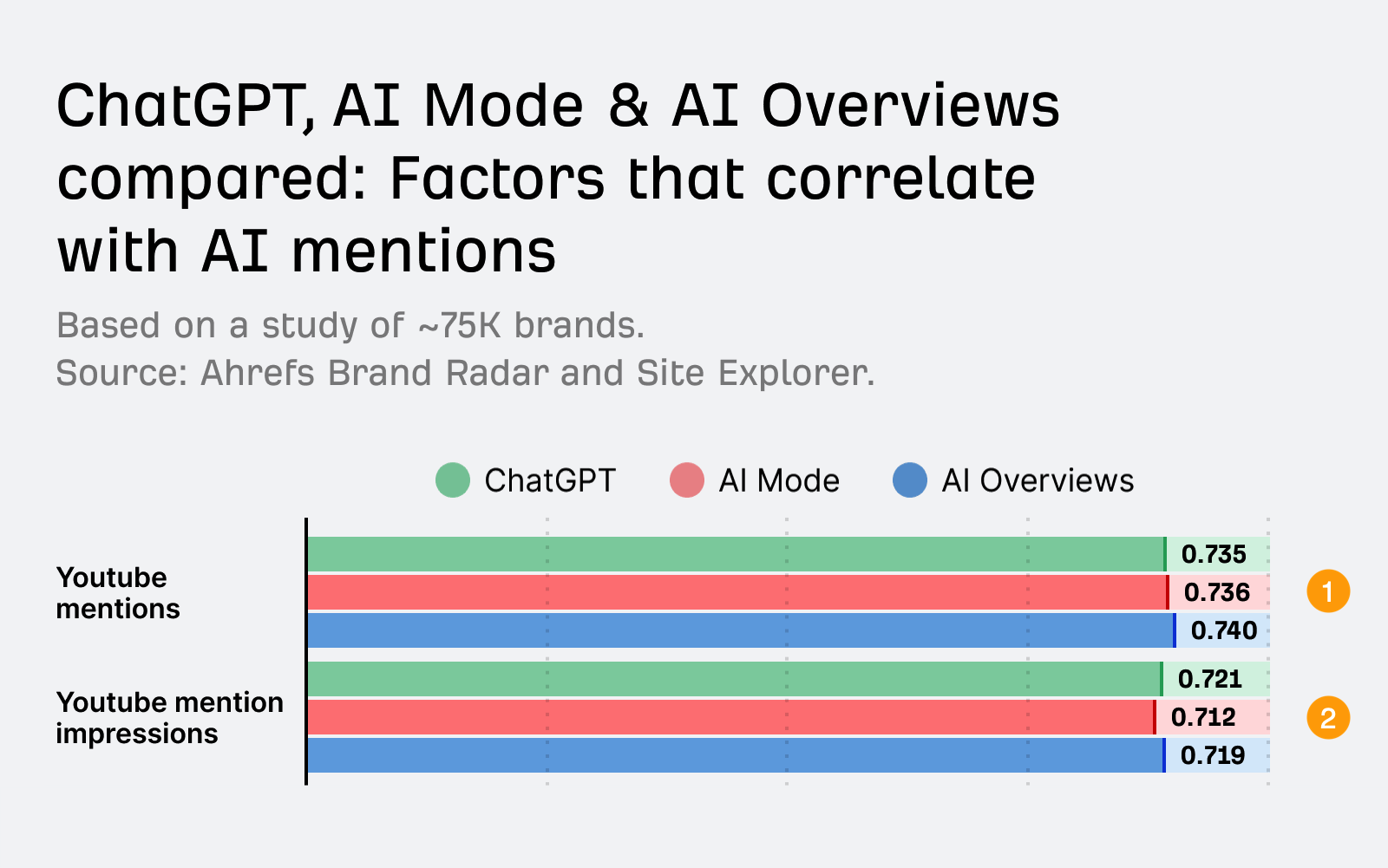
Bearing all of this in mind, you’d be wise to make YouTube part of your AI search strategy.
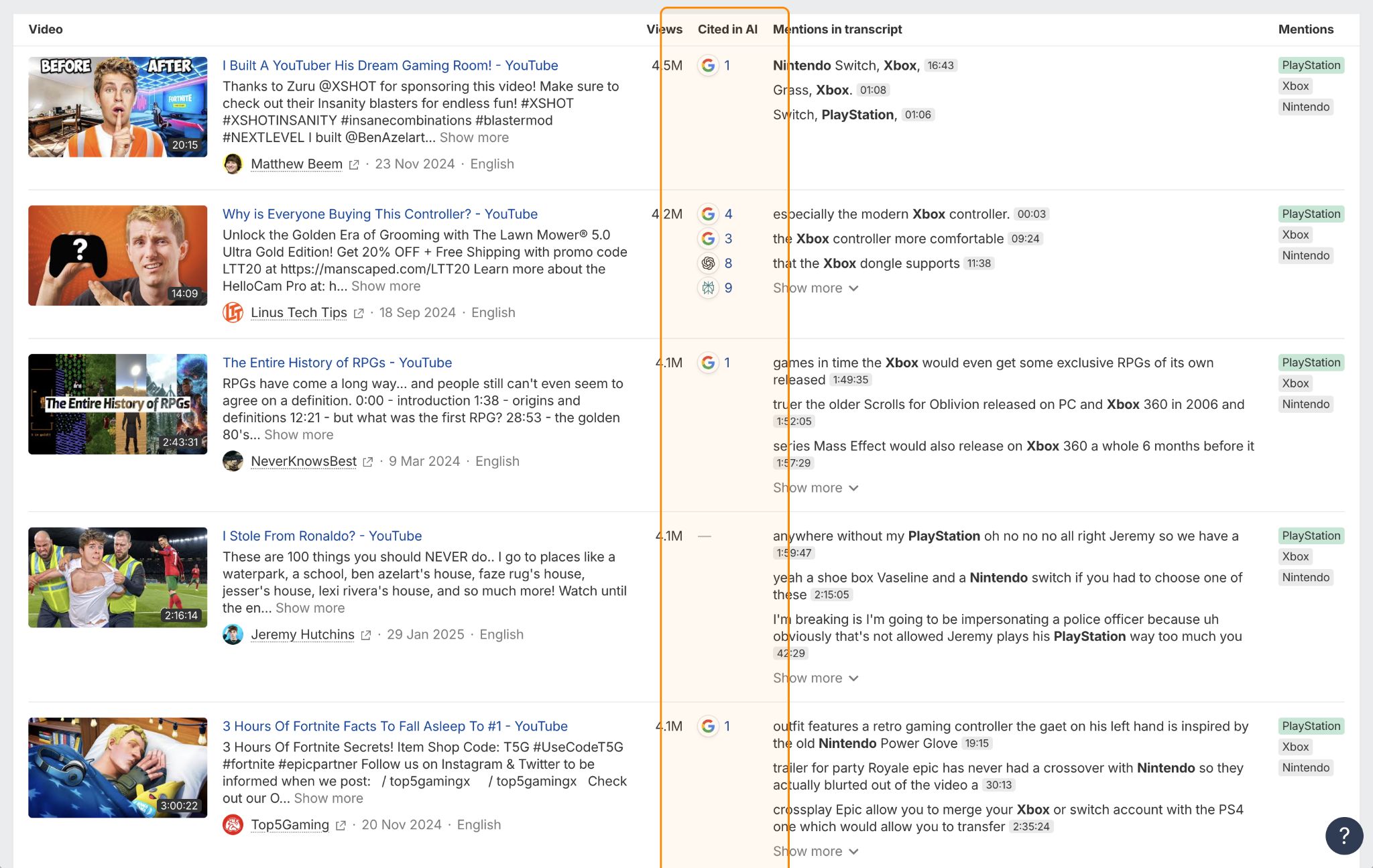
You can see which exact YouTube videos mention your brand in Brand Radar.
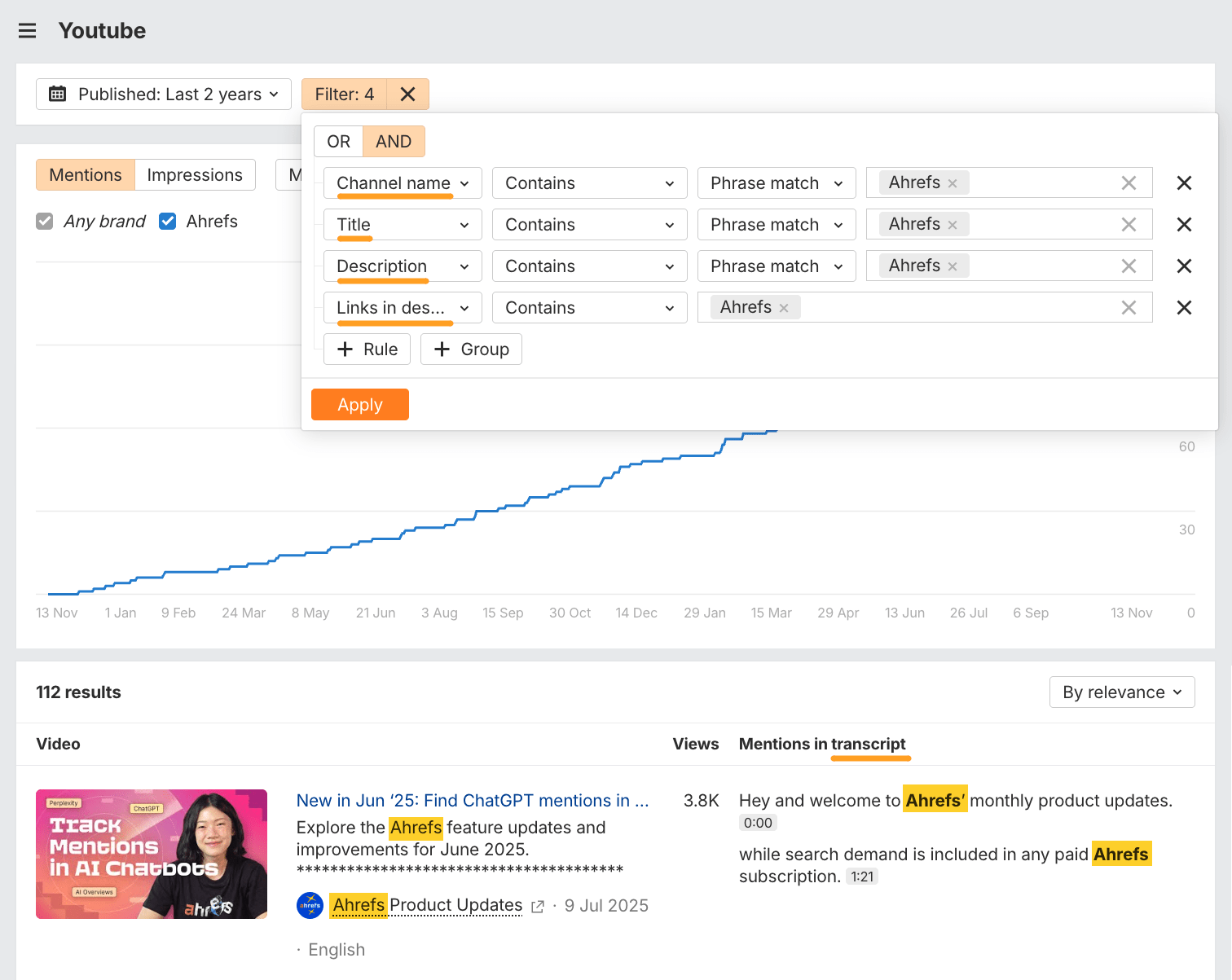
And, you can even see which of those videos get drawn into AI Overviews by checking the “Cited in AI” column.
If ranking in the same SERPs as an AI Overview is no longer enough to win an AIO citation, then what is?
I recently wrote an article on how to rank in AI Overviews.
In it, I spoke about how SEOs are moving from optimizing content for keywords, to optimizing for fan-out queries.
SEO Consultant, Ethan Lazuk, writes about exactly this in his great article Google’s Query Fan-Out Technique and What SEOs Should Know About It:
The more relevant you can make the passages in your documents (or other media) to fan-out queries, the likelier you’ll be to earn a mention or a citation in the AI-generated answer. So for the question of how query fan-out impacts rankings, just know that we’re no longer optimizing for individual keywords but rather entire user journeys, and those fan-out queries guide the way.
The thing is, Google doesn’t expose the simulated fan-out queries they generate for each AI response.
And, even if they did, AI Overviews are probabilistic.
Their content, citations, entities, and fan-outs change with every query. Read our study AI Overviews Change Every 2 Days (But Never Change Their Mind) for more on that.
But there are ways you can replicate the query fan-out process for yourself using tools, including:
- Qforia from iPullRank Founder Mike King
- This Gemini API + Screaming Frog workflow from GoFishDigital Co-Founder Dan Hinkley
- AI Visibility Fan Out by WordLift
Whatever route you choose, you need to make sure you’re covering your topic from all angles.
Here are some more ways you can do that using Ahrefs:
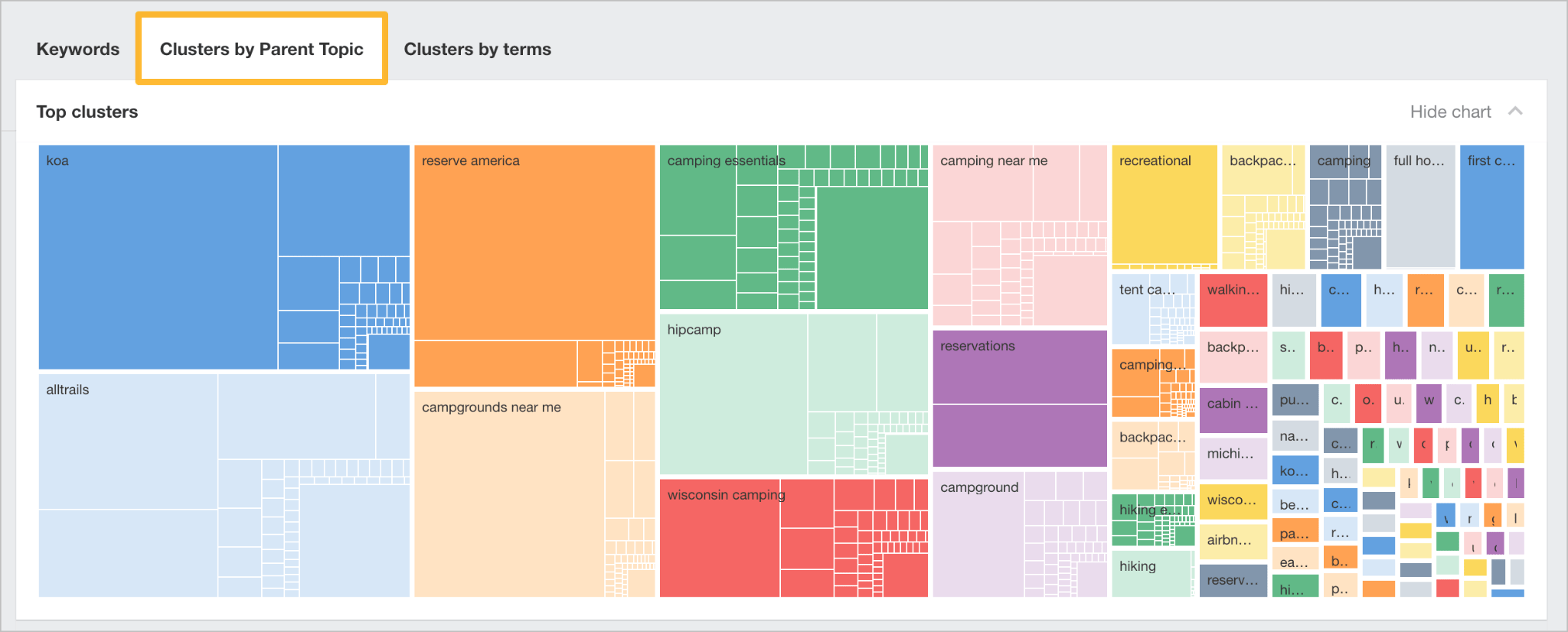
Use Parent Topics to cover every base
Parent Topics in Ahrefs Keywords Explorer shows you all the keywords, questions, and intent angles you could potentially target with a single piece of content.
Use it to find and cluster your content around related themes—not just single keywords.
Study fan-out queries generated by other AI tools
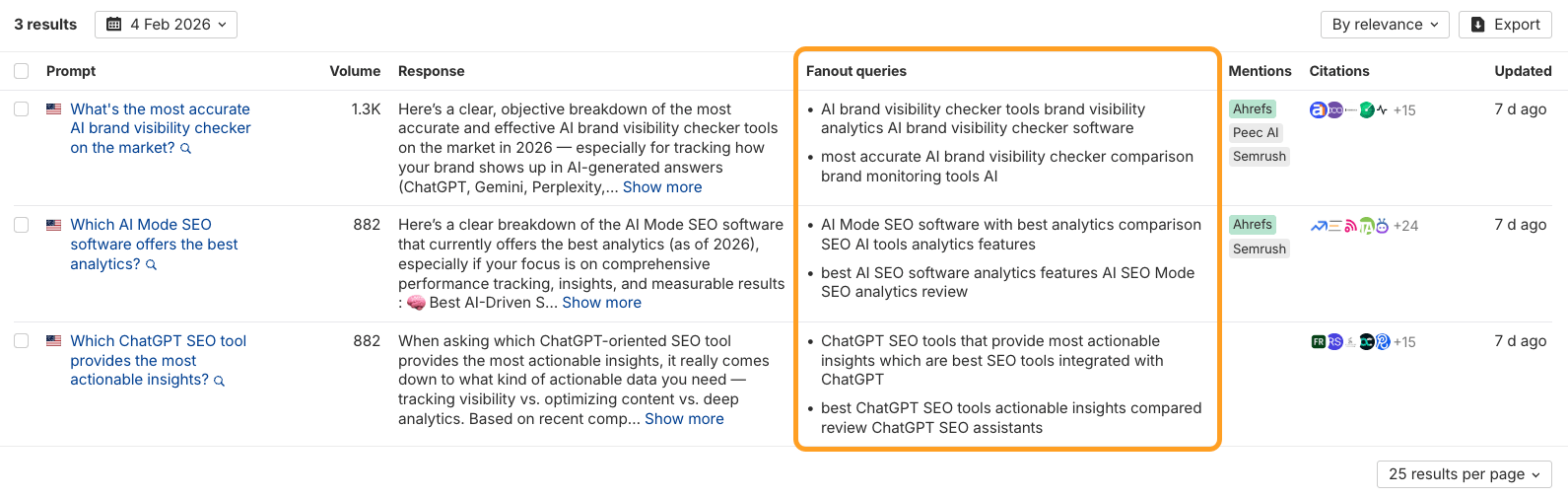
Fan-out queries are simulated and change from run to run.
It doesn’t matter so much whether you manage to perfectly mirror Gemini’s internal expansions.
It matters more that you are able to analyze lots of expansion examples, at scale, to identify recurring themes, topics, and intent angles that an AI may consider when constructing its answer.
You can study millions of ChatGPT and Perplexity fan-out query examples—tied to both database prompts and your own custom prompts—within the AI Responses report in Brand Radar.
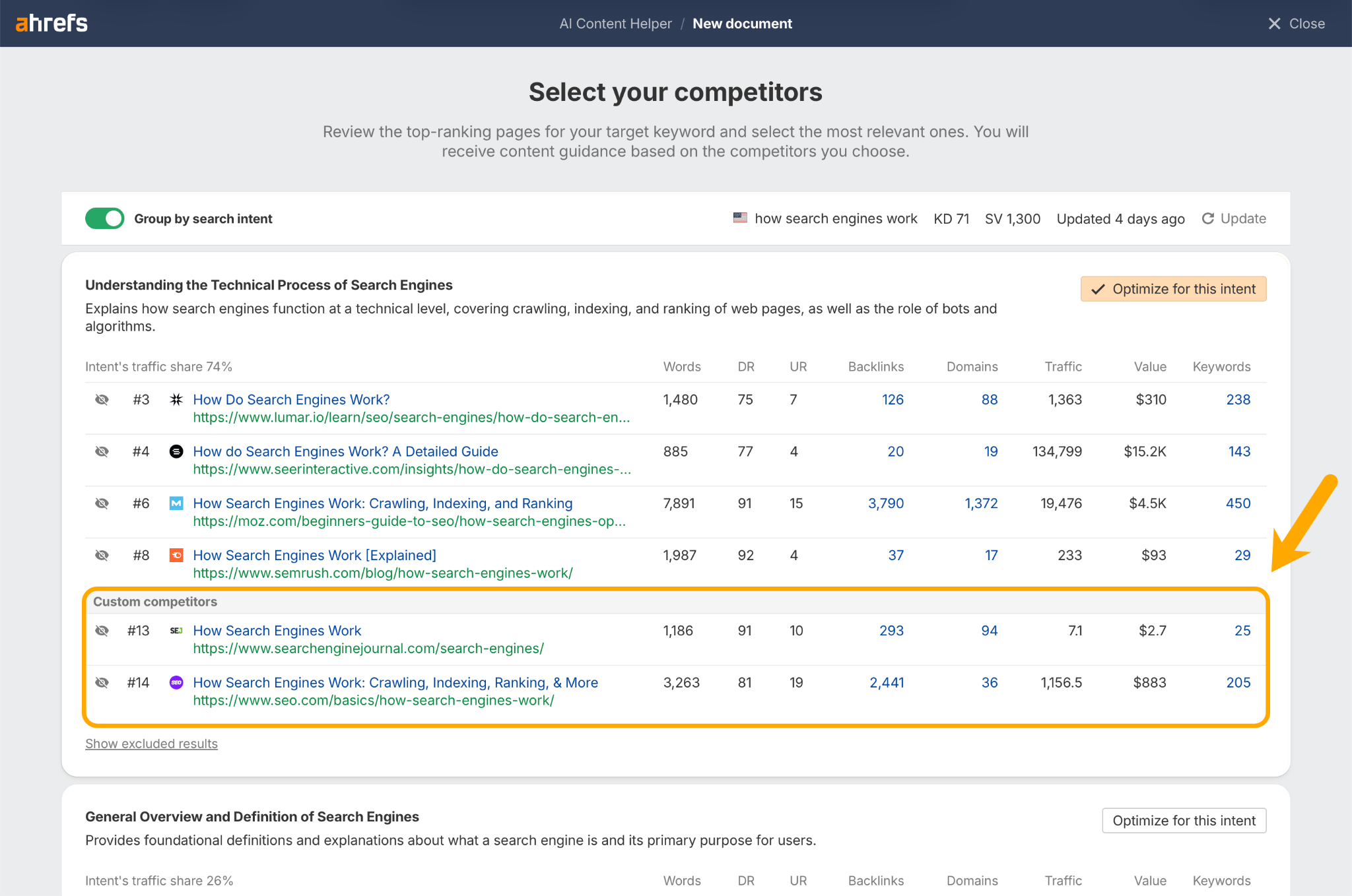
Use AI Content Helper to create comprehensive content
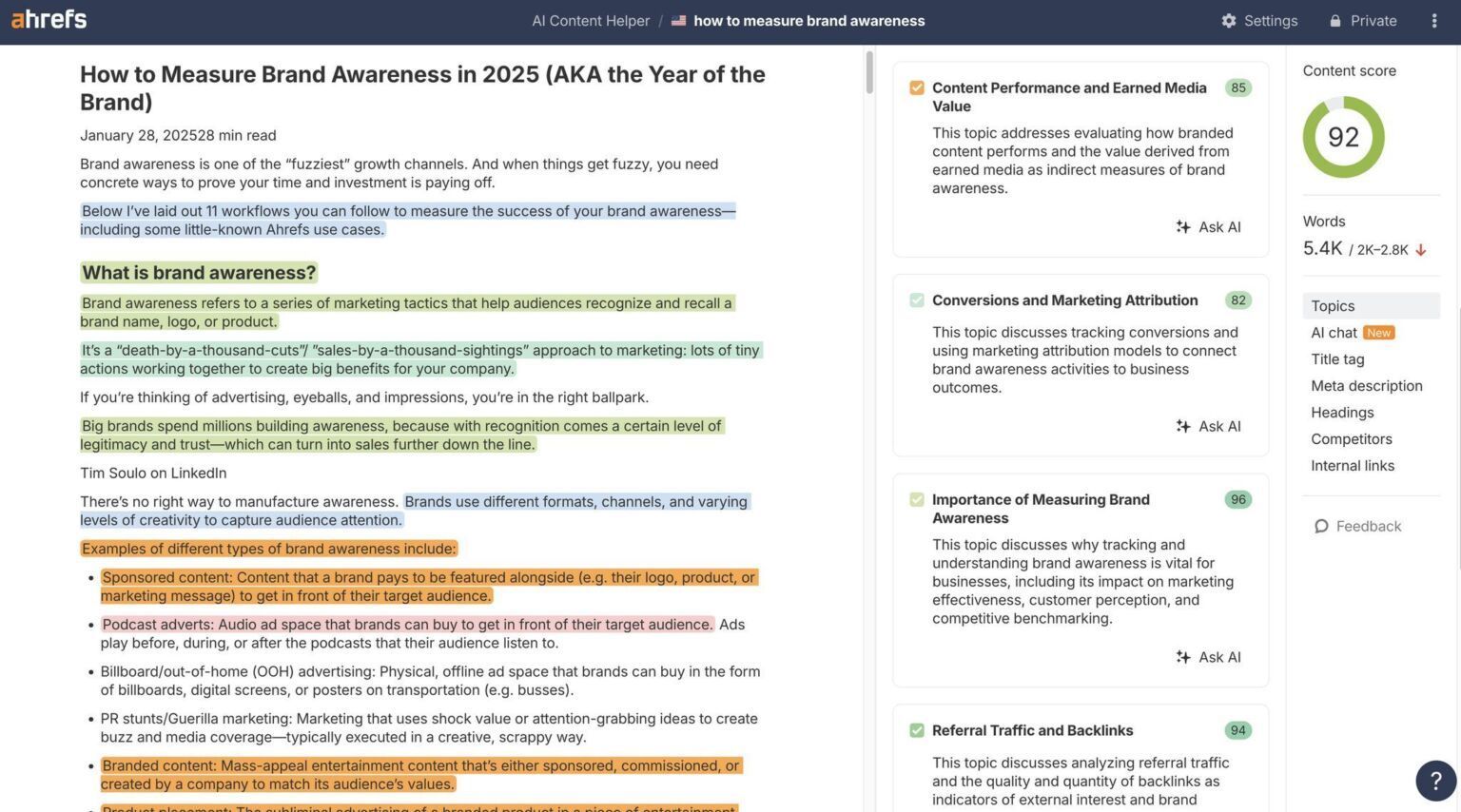
Our team has designed an AI Content Helper that lets you optimize your content specifically for AI search.
It generates related fan-out queries, then measures the cosine similarity between the topics covered in your content, and the topics the SERP or AI response is likely trying to address.
As you write, a colored highlight appears showing you how thoroughly you cover each topic.
You can use it to benchmark your content against the top 10 SERP results—but, as this very research has made clear, often the pages you actually compete with aren’t always ranking on page one; sometimes they rank further down, sometimes they appear in rich SERP features, and sometimes they’re picked from a different SERP altogether.
For that reason, you can now benchmark your content against your own custom competitors in Ahrefs’ AI Content Helper—including those that regularly win AI Overview citations.
Review your AI Overview citations in Brand Radar
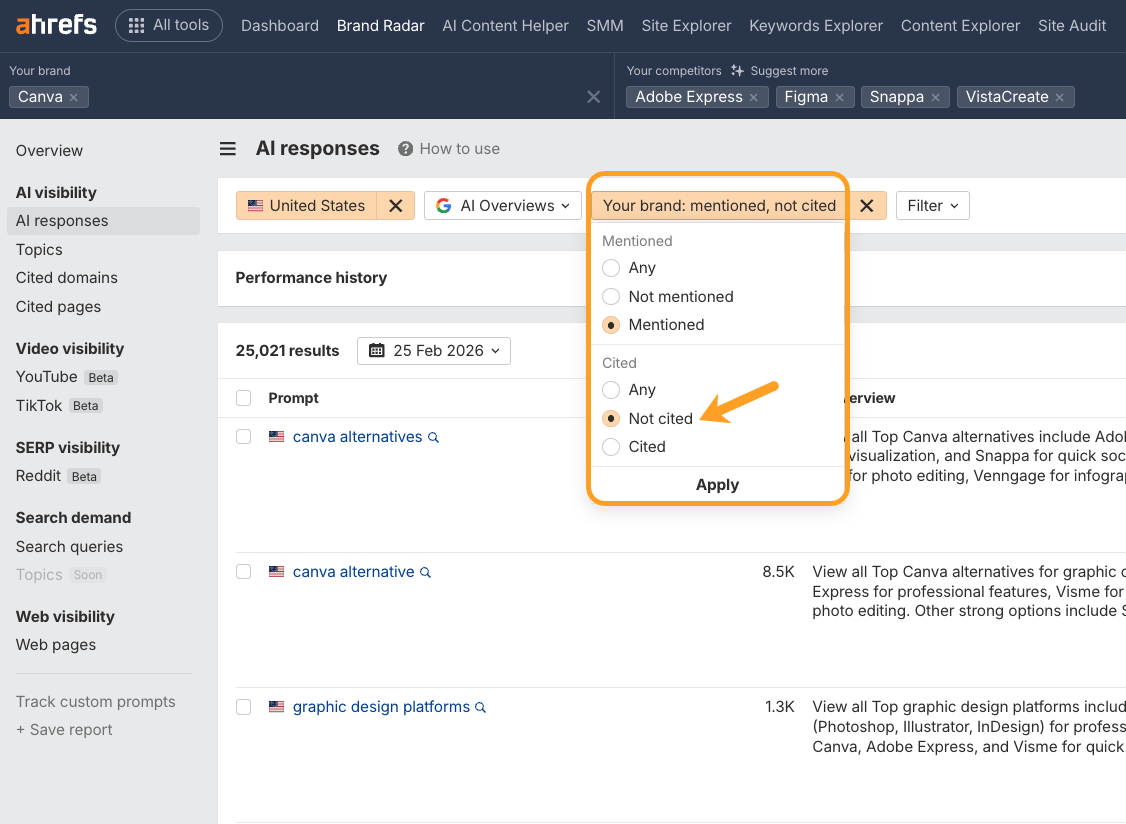
Studying your own AI Overview citations can help you claim more visibility because it shows you exactly what the system already trusts you for—and where you’re close but not quite selected.
For example, you can:
- See which pages and topics are already being cited, which reveals the angles Google considers you authoritative on.
- Identify gaps where competitors are cited instead, and reverse-engineer what additional context, entities, or subtopics they’re covering.
- Spot patterns in format (definitions, stats, step-by-steps, video embeds) that tend to get pulled into AI answers.
- Strengthen pages that are ranking but not being cited—often a sign that topical coverage or clarity doesn’t fully align with the expanded intent.
In short, citation analysis moves you from “ranking well” to “being selected as a source,” which as we know, may not always be the same thing.
Final thoughts
AI Overviews have shifted, and ranking for the user’s exact query is no longer a guarantee of visibility.
If you want to understand what Google actually trusts and how to earn more citations, start by studying the patterns in your own data.
And, as usual, if you have any questions about this research, feel free to ping me on LinkedIn.