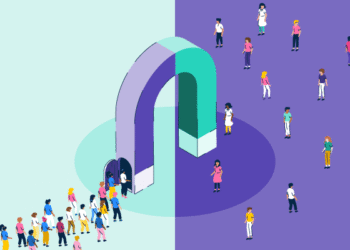
Tracking internet usage is more than just counting users. It’s about understanding how digital access shapes economies, education, innovation, and equity worldwide.
Over the past four decades, the internet has transformed from a research network serving a handful of academic institutions into a critical utility connecting more than 5 billion people. What began as a niche tool in the early 1990s has become embedded in everyday life, with billions relying on it to work remotely, access healthcare, attend school, manage finances, and engage socially.
While internet access has expanded at an unprecedented rate, it hasn’t been distributed equally. Many countries and communities still face persistent barriers: unreliable infrastructure, high service costs, low digital literacy, or limited access to devices. Urban regions often enjoy gigabit speeds and competitive internet service providers (ISPs), while rural or underserved areas struggle with spotty coverage and few options.
Understanding where and how the internet is used, who’s online, on what devices, and with what connection quality, can inform everything from policy decisions and infrastructure investments to business strategies and global development goals.
Whether you’re analyzing internet adoption trends, building a case for digital expansion, or simply curious about how far we’ve come, these internet usage statistics offer a clear, data-backed view of how the internet continues to shape the world.
Internet usage statistics: Growth of internet users over the years
There are some key milestones in global user numbers over time. The table below summarizes it by listing the number of global internet users and the share of the world’s population they represent.
| Year | Global internet users (approx) | Percentage of the world population online |
| 1990 | 2.6 million | 0.05% |
| 2000 | 396 million | 6% |
| 2005 | 1 billion | 16% |
| 2010 | 1.9 billion | 29% |
| 2015 | 2.96 billion | 43% |
| 2021 | 4.9 billion | 63% |
| 2025 | 5.6 billion | 69% |
Sources: Global Gateway, Melita, Wikipedia, Data Reportal
Based on the statistics above, the growth of internet usage has been explosive. Let’s dive into each of these periods to study why these numbers grew so dramatically.
Internet usage statistics: Reviewing the past four decades
The growth of internet usage has been exponential for the past few decades, from a small network of researchers in the late 20th century to a global necessity in 2025. Several elements fueled this adoption.
1990s: The birth of the web and early adoption with 2.6 million users
The roots of modern internet trace back to academic and military networks of the late 1960s and 1980s, such as the ARPANET. However, the widespread public usage began in the 1990s.
In the early 1990s, approximately 2.6 million people were online on the World Wide Web. Here are some key events that happened in this decade:
- Graphical web browsers like Mosaic and Netscape Navigator, which were built on top of Mosaic, became more accessible to regular users in 1993 and 1994.
- In the 90s, commercial ISPs offered dial-up internet to households. This resulted in close to tens of millions of internet users.
- There were around 3000 websites in 1994. By 2015, this number had increased to over 1 billion.
- By 1995, the internet user base had less than 40 million users.
- In 1995, the decommissioning of NSFNET made the Internet more accessible for commerce.
2000s: The mainstream expansion to grow beyond 400 million users
The year 2000 came with a dot-com bubble burst. It shook investors’ confidence in the internet business. Nevertheless, usage steadily climbed. There were approximately 400 million internet users in the 2000s, which is around 6% of the global population.
Several key events fueled this expansion. For example, broadband became widely available in developed countries. It replaced the slow dial-up connection. Moreover, the World Wide Web matured, with search engines like Google becoming more dominant, and social networks like MySpace and Facebook connecting millions of people.
In higher-income nations, email, web browsing, and e-commerce became everyday activities for many households. In 2005, global internet penetration reached approximately 16%, equivalent to around 1 billion online users. This growth extended beyond North America and Europe to encompass other regions of the world, including Asia and Latin America.
Then, in 2010, a digital divide emerged, with developed economies accounting for two-thirds of the population, compared to just 21% in developing countries.
2010s: Internet users reached 2 billion
If the 2000s got the world online, the 2010s truly connected the globe. With the introduction of mobile phones, internet accessibility underwent a significant transformation. People were able to leapfrog to wireless internet.
In 2010, there were just under 2 billion people online. This number became more than double by the end of the decade. Social media was the primary driver of internet adoption and usage.
Around 2017 and 2018, roughly 50% of humanity was online for the first time. Precisely, 49.35% of the world was using the internet by 2018, up from 30% in 2010 and just 16% in 2005.
By the late 2010s, the average internet user was spending 6.5 hours per day online.
2020: Approximately 800 million new users came online from 2019 to 2021
In the 2020s, COVID-19 forced work, school, and social life online. This pushed internet adoption up. The global internet usage increased by 11% in 2020 (and an even higher 15% jump in low and middle-income countries).
By 2022, there were roughly 5.3 billion people online, almost 66% of the world’s population. Based on 2023 data, the average weekly time spent online per person was around 33 hours and 23 minutes.
69%
of the global population uses the internet today. As of April 2025, this is approximately 5.64 billion users. This means roughly two-thirds of the world population is now connected.
Source: Data Reportal
Global variations in internet use at a glance
While internet usage is global, it is not evenly distributed. A critical aspect of understanding internet usage statistics is looking at who remains offline and the disparities between different regions and demographics:
Developed vs. developing regions usage
Below are some variations in internet usage by region.
- 80% of the population in developed economies used the internet in 2022, compared to 35% in developing countries.
- In high-income, developed countries, internet use was nearly universal, about 93% of the population was online in 2024, compared to 27% of low-income countries.
- In least-developed countries, internet access rates were around 36%.
- Europe has some of the highest usage rates in the world. Around 95% of European households have internet access by 2025.
- Only 25% of the total population in Sub-Saharan Africa is online. Infrastructure exists, but awareness and affordability remain a barrier.
Urban vs. rural usage
Below are some variations in internet usage by demographics.
- In 2023-23, 83% of people in urban areas use the internet. At the same time, only 48% of people use the internet in rural areas.
- Of the 2.6 billion individuals who were offline globally, approximately 1.8 billion lived in rural areas as of 2024.
Gender and age-based usage variations
Below are some variations in internet usage by gender and age.
- In 2024, around 70% of men and 65% of women globally used the internet.
- Between 2013 and 2019, the Internet gender gap remained relatively stable in the Americas and was decreasing in the CIS countries and Europe.
- A quarter of Americans aged 65 and older said they had never been online, compared to just 1% of those aged 18-29.
- Younger people are more likely to be online. Globally, approximately 79% of young people aged 15–24 use the internet, compared to around 65% of those aged 25 and older.
- There are roughly 189 million more men online than women worldwide.
Looking beyond the recent internet usage trends
Below is an overview of various aspects of internet usage, along with a forecast of the global user base’s growth in the foreseeable future.
| Most preferred device | 96.3% of internet users go online through some type of mobile phone, while only 61.5% use a laptop or desktop computer. |
| Total time on the internet | A typical global user spends 6 hours and 38 minutes per day using the internet. |
| Most preferred online activity for phone users | Texting and watching videos were among smartphone users’ most popular online activities worldwide. |
| Download speed | Globally, the average mobile download speed is approximately 92.31 Mbps and 101.37 Mbps for mobile and broadband services in 2025. |
Toward a more connected future
The story of the internet went through growth and challenges to reach around 5.6 billion users worldwide. Today, people spend over 6 hours on the internet for work, entertainment, learning, or staying connected with their friends. It has become an integral part of everyday life.
However, developing, rural, and low-income groups still face challenges in accessing the internet due to affordability and awareness gaps. Looking ahead, experts predict that by 2030, over 90% of the global population may be online. Approximately, there will be 7.5 billion internet users in 2030.
As more people get online, the internet’s role in shaping lives will only grow stronger, especially with evolving tech like AI. For example, 73% of US companies have already adopted AI in some areas of business. In the same vein, the growth of AI platforms, tools, and infrastructure on G2 was 38%, with a consistent stream of new products added every year.
Check out these interesting AI statistics to see how technology can transform lives further in the present and future.